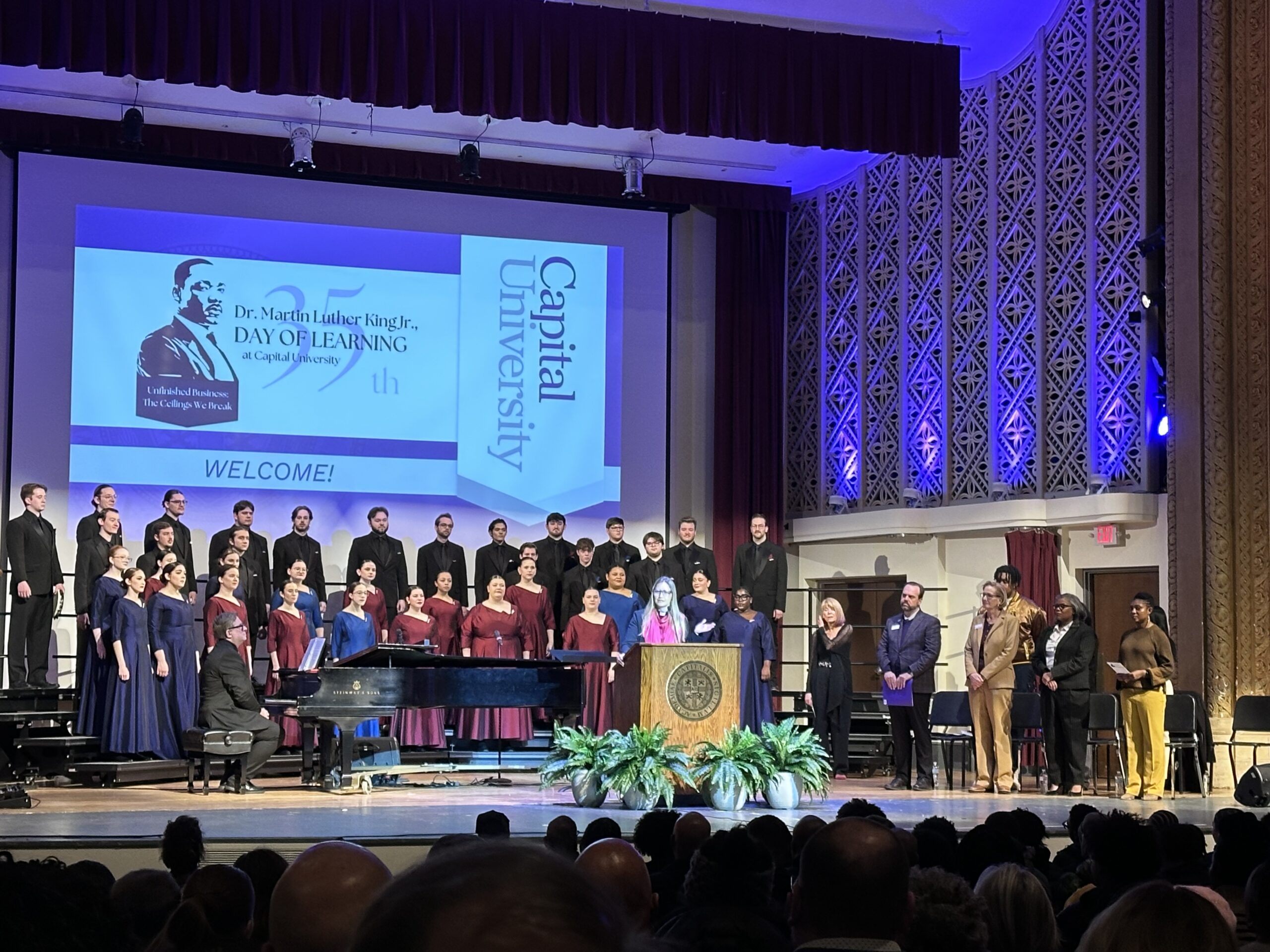
Exuberant praise filled Mees Hall as Gregory J. Watkins and The Worship and Praise Chorale kicked off the 35th Martin Luther King Jr. (MLK) Day of Learning.
Their powerful voices ignited the audience: some clapped, while others sang along with them. Some did both.
But as introductions quieted down, keynote speaker Judge Laurel Beatty Blunt walked to the podium, and the audience erupted with applause, her presence speaking for her without anything being said at all.
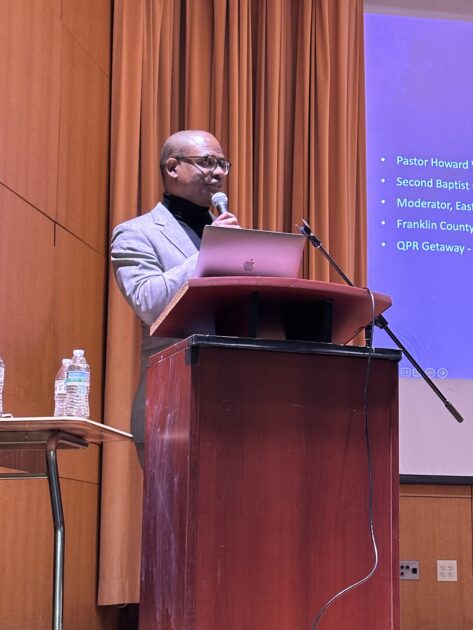
Her cheerful attitude brought lighthearted jokes and laughter, but the theme behind the 35th MLK Day of Learning soon weighed heavily behind her keynote speech: unfinished business and breaking ceilings.
The audience watched quietly and held onto her every word:
“What makes ceilings so powerful is not just their strength, it’s their subtlety. Ceilings often come disguised as tradition, as professionalism, as ‘this is just how it’s done.’ And when something is presented as normal long enough, people stop questioning it. They start adjusting themselves instead: they duck, they shrink, they work around it. And eventually, the ceiling does not even feel like a barrier anymore,” Blunt said.
In her speech, Blunt spoke of “the ceilings” that moved within her own family.
Her grandfather had once shined the shoes of the men who walked inside of the Ohio Statehouse. Later on, his own son was sworn in and became a statehouse representative himself. The son went on to law school, in which his children, Blunt and her brother, followed suit and became lawyers.
“That’s real progress, and that matters,” she said.
Change is a substantial part of breaking ceilings; Blunt said it is what allowed broken systems to amend and reform.
She referenced Dr. Martin Luther King Jr.’s “Letter from Birmingham Jail,” where Dr. King refused to stop and wait for change to happen. He essentially said that “waiting had almost always meant never” and “justice delayed was justice denied.”
“Change has never required perfect conditions. It has always required people willing to act where they are,” Blunt said.
Change can come from the smallest places, and “[it] is where the unfinished business lives.”
Blunt expressed the need for at least something to be done, rather than everything. She wanted the audience to always question ceilings and understand that there is always more that can be done.
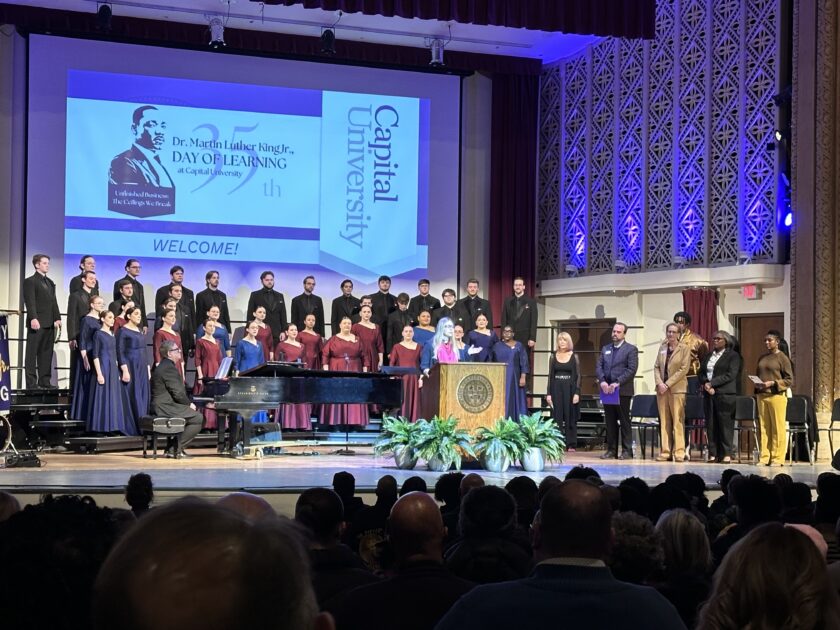
After the empowering convocation, community members walked to the Conservatory of Music, where four workshops waited for them.
Tristen Davis, the university’s associate director of Student and Community Engagement (SCE), said the number of workshops this year was new compared to the previous years of in-person workshops. Last year, they only had three.
“The biggest complaint that people had was that they wished they could have gone to multiple [workshops],” said Davis. “They enjoyed it so much they wanted to go to multiple, so this year, we made sure that the workshops would repeat.”
The workshops started in the morning then repeated once in the afternoon, so people could go to at least three of them throughout the day.
Inside the Harry C. Moores Student Union, attendees visited stalls from small, Black-owned businesses that sold items ranging from jewelry, T-shirts, essential oils and much more. Lunch was also offered in the Main Dining Room, free to all.
“I’ve been here since the early morning, and most of my items are gone,” said a small business owner who was surrounded by her leftover jewelry. “I only have a handful of things left.”
Davis said the community coming together is what makes the MLK Day of Learning special. It allows for celebration and remembrance of Dr. King’s work and all of what he stood for.
The event feels particularly special to Davis, as she has been coming to MLK Day of Learning since she was a child. Davis hopes more people continue to show up and carry on Dr. King’s legacy.
She wants all attendees to reflect and feel empowered enough to take action.
“[Alongside] this call to action, [I want] people to recognize that even though so much progress has been made, there’s so much more work that needs to be done,” said Davis.
Something new the SCE introduced this year was the National Pan-Hellenic Council (NPHC) Stroll Showcase. The showcase celebrated the Divine Nine organizations, which are historically African-American fraternities and sororities.
The Founder’s Days of these organizations happened to fall in January, making it a perfect opportunity to celebrate them on the Day of Learning.
“This is an opportunity to show Capital University the culture of these organizations,” said Davis.
Annually, the SCE gives students a chance to contribute and help organize the Day of Learning. Volunteer positions are open to anyone.
“We highly encourage students to volunteer for the day. Whether that is being a wayfinder, a greeter, or helping our workshop presenters unload — there is so much that can be done,” said Davis. “Everybody can be part of the CapFam.”