

Season 2 of “Percy Jackson and the Olympians” wrapped up last week with an epic final battle and notable changes from the original books. What set this adaptation apart from its predecessor wasn’t the bigger battles or flashy effects but its nuanced character changes.
With the book’s original author, Rick Riordan’s, close involvement and the freedom of a long-form TV show, the series is able to transform one-dimensional book characters into compelling and fully realized people.
Adapting a beloved book series for the screen is a difficult task — especially since the first two “Percy Jackson” films were widely regarded by fans as failures due to the dramatic departures from the source material.
Consequently, the writers were under even more pressure to get it right by balancing the heart of the books with changes that improve the story and resonate with contemporary audiences.
Since the first book’s publishing in 2005, Riordan has always been receptive to fan input and critiques, especially regarding representation in his stories. His recent books show his understanding of changing cultural awareness, and the TV show takes a similar approach.
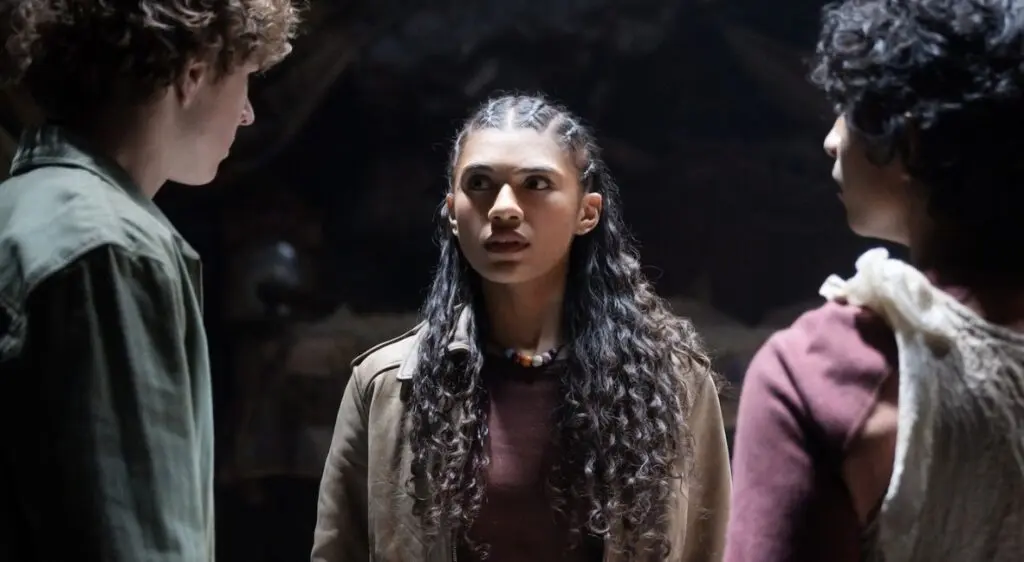
A notable change from the source material is the expanded role of many side characters. One of these stand out characters is Clarisse La Rue, who transforms from a one-dimensional bully in the book, to a relatable hero on the screen.
On the official “Percy Jackson” podcast, Dior Goodjohn, who plays Clarisse, said, “the big thing that I’m excited for people to see is to just watch her become a well-rounded demigod. We get to see all of her facets and actually understand her brain and her reasons why ‘cause it’s really easy to hate her. I hated her in the book … ‘Show’ Clarisse is so different.”
The series invests time in exploring Clarisse’s side of the story, which allows the audience to see her desire to prove herself to her father, Ares, and to be accepted by the people she admires.
Goodjohn told Geekcentric, “What I appreciate that the writers did this season was the vulnerability that Clarisse shows the cracks in the armor in four. I love the labyrinth [that] is drawn into season two and they’ve done it so beautifully so that you as the fan can decide whether or not you want to be rooting for her, and I think that’s a beautiful thing how they did it.”

By giving Clarisse room to struggle and grow, the writers turn her into one of the show’s most compelling supporting characters.
On the podcast, Goodjohn shared her connection to her character’s arc. “Clarisse and I were going through a very, very similar arc in our lives … I was going through a period in my life where I was learning what it meant to actually set boundaries and what it meant to critically think in my own way.”
The writers have demonstrated a commitment to portraying nuanced female characters since Season 1, where Medusa was given a more empathetic look. This change showed the writers’ sensitivity to cultural changes and contemporary associations of Medusa with survivors of sexual assault.
This trend of humanizing female antagonists continued with Circe in Season 2; her character is not defined by her mythological role or even her portrayal in the book.
The series shows Circe as a woman motivated by betrayal and loneliness in a way that allows the audience to better understand her, without excusing her actions and keeping her as an antagonist.
These character changes are made possible by the TV show format. The original book series was entirely from Percy’s perspective, which allows the reader to connect with him but makes it difficult to flesh out more than a few supporting characters.
On the other hand, ethe TV show is able to show scenes without Percy and focus on other characters. This makes the show feel more full and gives the audience a better understanding of the big picture.
Fan reception to these changes has been generally positive. Screen Rant went as far as to say that, “For the most part, these changes have worked to mark a rare case in which the live-action adaptation is better than its source material.”
Season 2 has shown that the most important part of staying faithful to a source material is preserving the spirit and theme, while translating the story into a form that feels relevant and compelling today.