
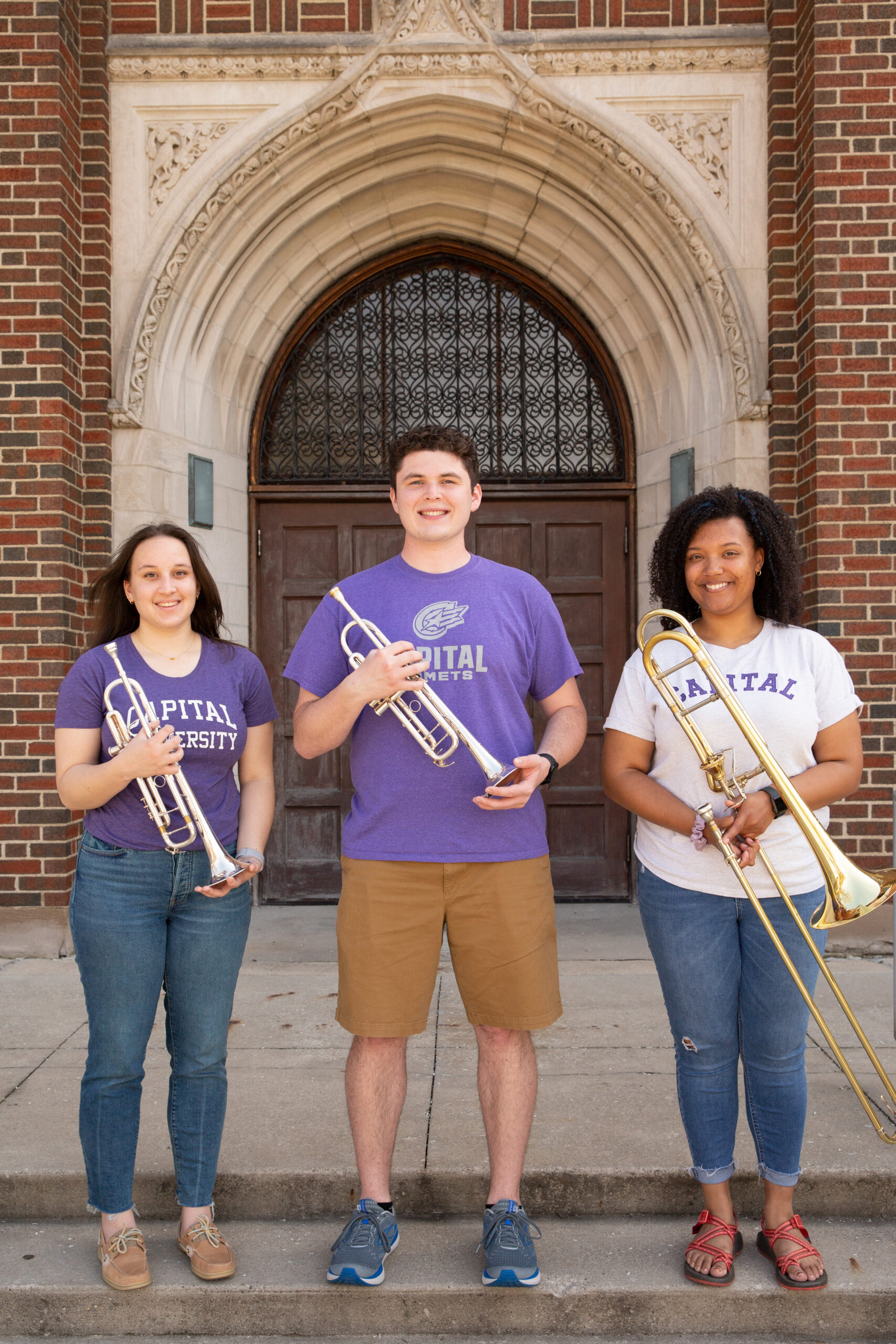
The university will welcome a brand-new pep band to its athletic and campus events this fall, reinstituting a historic university tradition.
The idea for reintroducing a pep band to the university came from President Tice, who during his first Gate Ceremony (the traditional entry of first-years through the Memorial Gateway), told Dr. Ishbah Cox, director of wind ensembles in the Conservatory, that he wished the university had a band to play for the ceremony.
“That initial conversation was like … ‘How would it be to have a pep band playing for this?’ And I’ll be honest with you, I said, ‘I think it would be fantastic,’” Cox said.
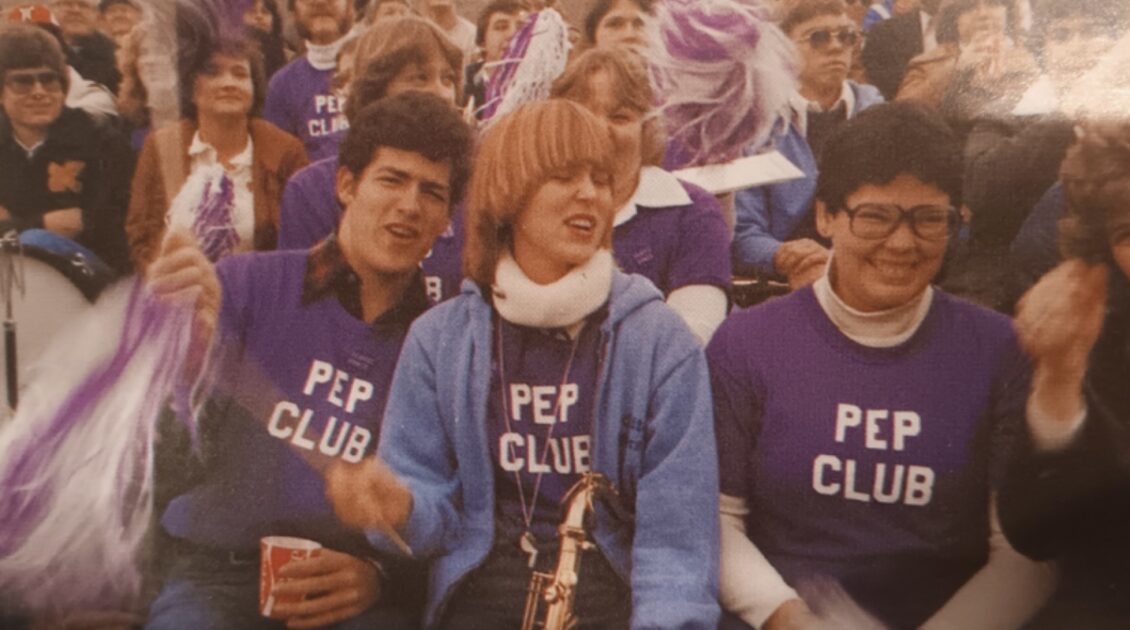
The main goal of starting the pep band is to bring different together groups of the university and larger community.
“[The band is] a uniting of communities who have not really collaborated together,” Cox said. The pep band will work to cheer on the athletic teams to win and to bring a sense of excitement to campus events.
“[The pep band will be] an extension of our conservatory to non-music majors. There are people on this campus who play instruments but won’t come to [the conservatory] for whatever reason — could be an intimidation factor,” Cox continued.
The music for the band will be at a high school difficulty level, and there won’t be traditional auditions for interested musicians. The group is open to any students, faculty, staff, or even university alumni who have played an instrument before.
“What we will do is post — when we get a little bit closer [to fall] — samples of the music the band will be playing. The students [faculty, staff, or alumni] can then look at it and select, ‘Yes, I can play this,’ or ‘NNo, that’s too hard,’” explained Dr. Thomas Zugger, dean of the conservatory.
“We want it to really be inclusive,” Zugger continued.
The decision to include interested faculty, staff and alumni in the program, rather than just students, was made to emphasize community involvement at the university.
“The social aspect of the pep band is one of the most important things … If that gets a few more of our staff and faculty and alumni coming to campus, there’s nothing negative about that,” said Zugger.
Non-music majors who participate in the pep band will be able to receive a $500 scholarship per semester, and the band will count as a one-credit hour course. Music education majors will be able to apply to be student assistants for the band, giving them valuable experience to prepare for their careers.
In terms of the participation scholarship, Zugger explained, “A lot of institutions do this. It’s a recruiting tool. If you are a non-music major, and you’re looking at [for example] two psychology degrees [from different institutions], but if you come to [the university], you can play in the pep band and get an extra $500 a semester, that’s another person [enrolled]. That actually is making us more than that $500 [that we’re losing].”
A major estate gift from Don Wachtman and Carolyn Herath Wachtman, two alumni who eventually worked at the university, will be used in funding the equipment, uniforms and instruments for the band.
Anticipation for the beginning of the band is developing amongst interested students, who still have questions about how the program will operate.
“From what I’ve heard, there’s like a true neutral of ‘Oh, we’ll get a pep band …’ It’s going to be bumpy. It’s a new program. Pep bands aren’t really any joke, especially if they want to have a diverse [number] of instruments playing,” said Danny Myers, a first-year psychology pre-medicine student who participates in the Ohio State University (OSU) athletic band through the Higher Education Council of Columbus (HECC), which allows university students to participate in OSU’s music ensembles.
While Myers had concerns that the university starting a pep band would end HECC, Zugger explained that HECC would not be affected: “Two separate things. We would hope [students] would rather play in our pep band.”
Myers would rather continue participating in OSU’s more established athletic band.
“Respect to Capital, [but] OSU has such diverse [events the band] can go to … I’m hoping Capital eventually becomes like that,” said Myers.
Other students are more excited about the pep band rejoining the university tradition but have concerns about the time commitment that will be required to participate.
“I know a couple people who are interested who are also music majors,” said Jill Planisek, a first-year education major.
“One of my concerns is time. I am in 13 classes … [music-majors] have recital hour every week … we have to go to ten outside recitals every semester … A lot of people in the conservatory that I’ve been talking to [say] ‘I would do [pep band], but I don’t think I have the time to commit to it.’”
“I emailed Dean Zugger and said, ‘I would be interested if it fits into my schedule,’” Planisek continued.
Interested students who have experience with marching bands and pep bands also have concerns regarding instrumentation.
“[For example,] there might be a problem of a lot of people wanting to do percussion, but no one [wanting] to do low-brass,” said Mena Osborn, another first-year music education major, whose primary instrument is trumpet. “I haven’t heard a lot of brass talking about it because [we] have a lot of heavy work.”
“Instrumentation could be an issue,” Planisek agreed.
Administration, for now, doesn’t seem worried about any lack of interest.
“I feel [confident that the pep band] will have a high interest of individuals who want to partake in it,” stated Cox. The goal for the group is 25 to 30 participants, though there is no “high limit” according to Zugger.
Questions for those who are interested still remain unanswered, since the program is still in development.
“More information is coming soon. We will begin the search for the part-time pep band director soon, and once that person is on board, then before registration in the spring, we will have more information,” said Zugger.
Any students, faculty, staff, or alumni interested in playing for the group are encouraged to email Dean Zugger at tzugger@capital.edu.
