Recent polling data from Gallup showed that optimism among U.S. adults has reached a record low point. The Chimes conducted a poll via Instagram asking the same questions as Gallup, with some additional questions to gain more insights.
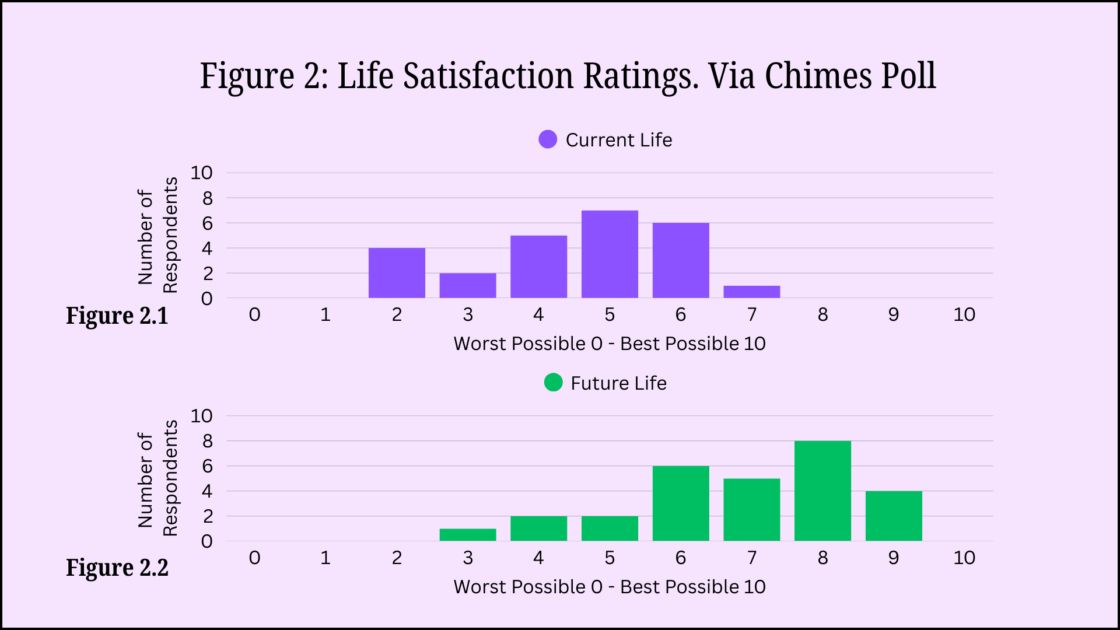
Respondents to the Chimes’ poll reported lower current and future life ratings than the national poll, yet rated their future life significantly higher than their current life, indicating greater hope for the future than the general U.S. adult population.
To measure current as well as future life satisfaction, Gallup asked, “Please imagine a ladder with steps numbered from zero at the bottom to 10 at the top. The top of the ladder represents the best possible life for you, and the bottom of the ladder represents the worst possible life for you. On which step of the ladder would you say you personally feel you stand at this time?”
They next asked, “On which step do you think you will stand about five years from now?”
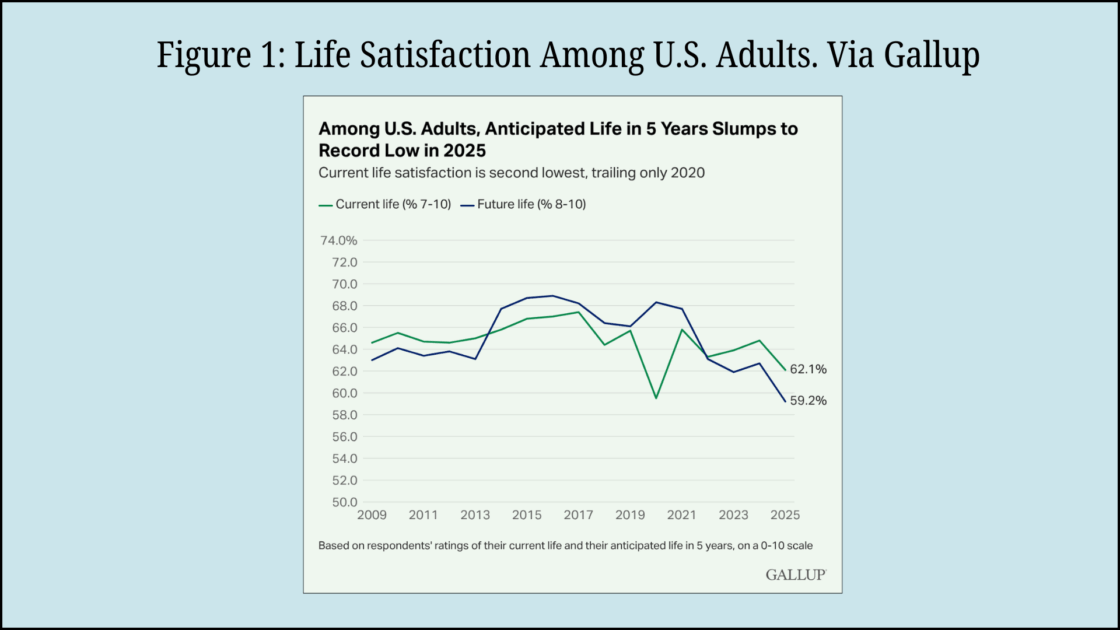
Gallup found that both current and future life ratings dropped among U.S. adults, indicating a decline in perceived quality of life and optimism for the future (Figure 1).
Gallup uses these two measurements to calculate a thriving score for the country. “Those who rate their current life a 7 or higher and their anticipated life in five years an 8 or higher are classified as thriving … the future life metric has had an outsized influence over eroding thriving rates because it has declined much more substantially.”
At 48%, the 2025 “thriving” rate is the sixth-lowest since the 2008 financial crisis and the lowest since the peak of the COVID-19 pandemic.
Respondents to the Chimes’ poll were asked to rate their current and future life on the same ladder at the Gallup poll.
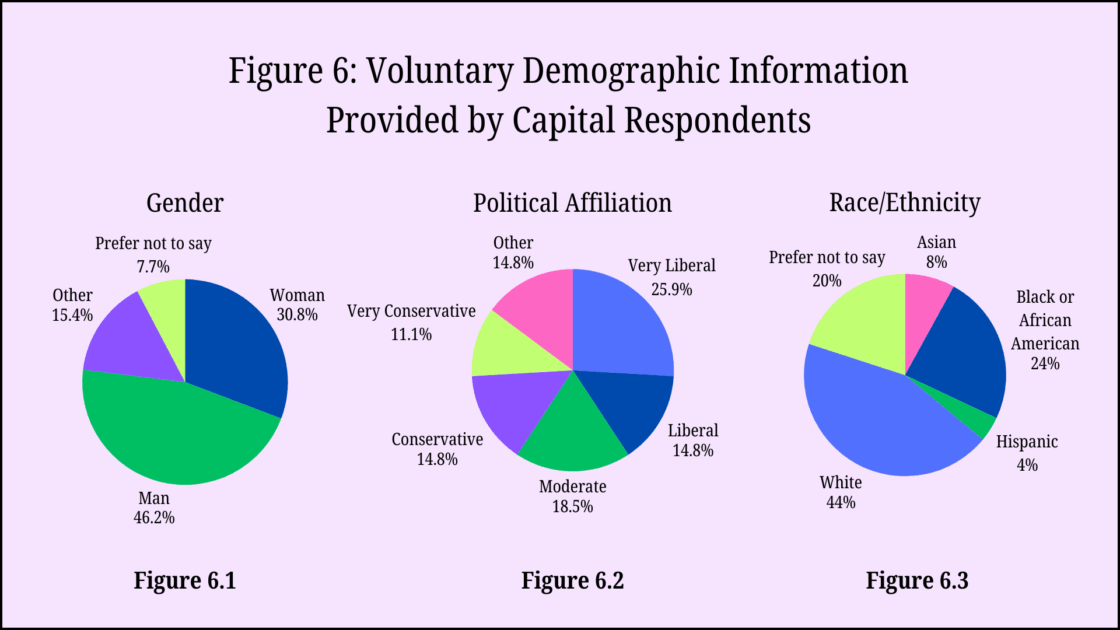
All of the respondents to the poll were current students or alumni, and all self reported as Gen Z or Millennial. The respondents also provided voluntary demographic information.
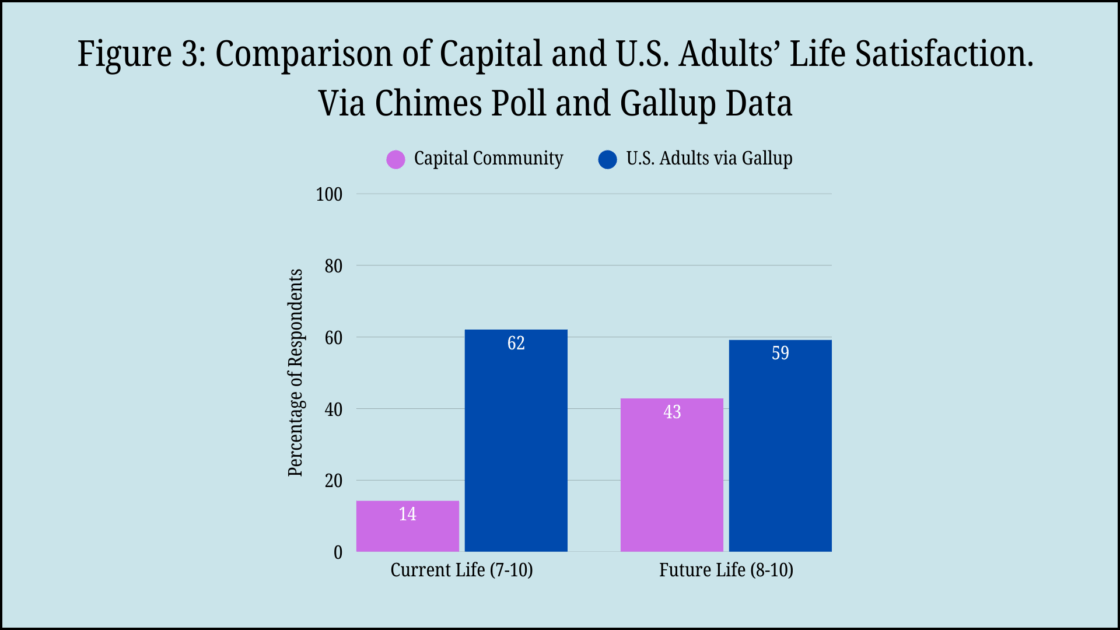
This poll found that respondents rated their current life far lower than the U.S. adult population with only 14% rating their current life in Gallup’s “thriving” range, compared to 62% nationally.
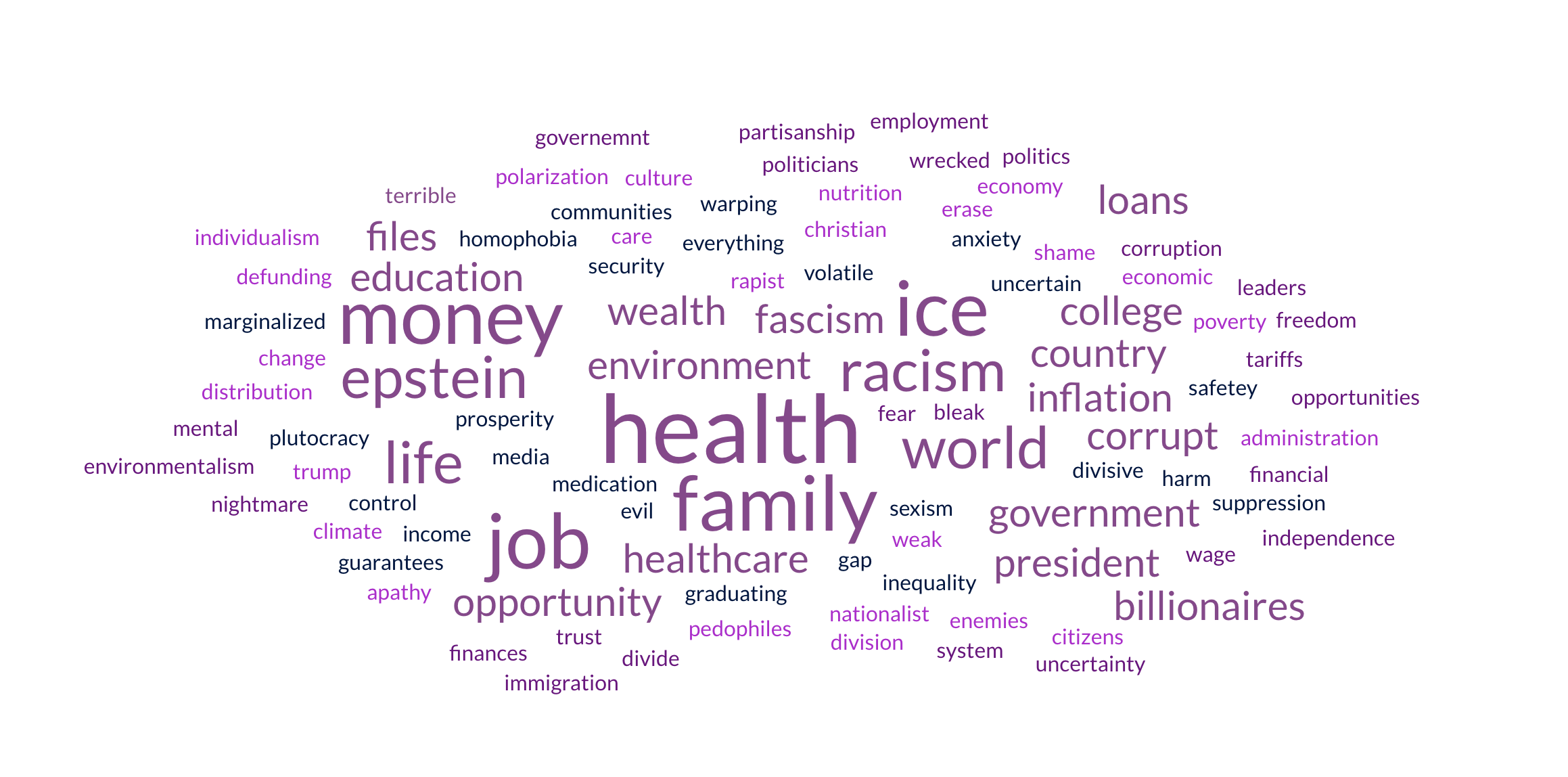
This section also asked for comment on what factors most influenced their ratings; most comments related to finances, health, family, or stability.
One respondent said, “The factors outside of my control. We are graduating into a very uncertain and volatile world that guarantees very little prosperity.”
Despite this dour outlook, there was a noted jump in optimism for the future compared to the national score. U.S. adults reported their future score as three points lower than their current life, while Chimes poll respondents averaged 29 points higher, despite being lower overall.
This higher optimism rating may be attributed to the relative youth of the respondents, as well as college students being an eager demographic.
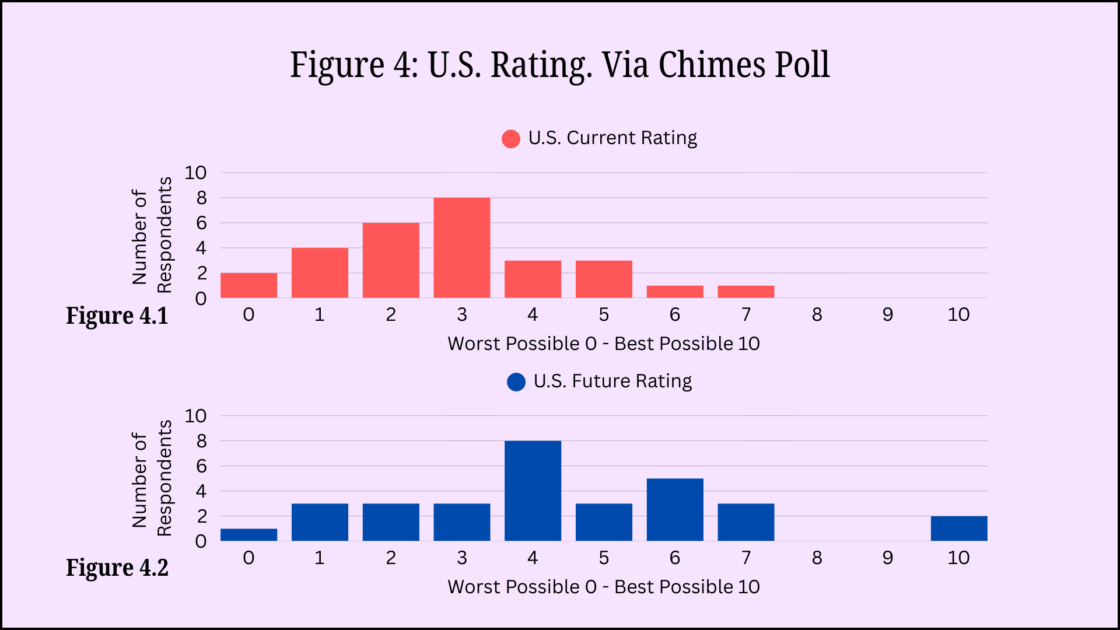
Respondents were next asked to rate the U.S. on the same ladder (Figure 4).
The majority of respondents rated the current state of the U.S. very low and the future in the mid-to-high range, mirroring the optimism for the future shown by the previous question.
Most comments related to extremism, corruption, failed leadership, immigration and the economy. Recent ICE actions and the Jeffrey Epstein scandal were also cited as major contributing factors.
One respondent wrote, “The biggest issues are definitely fear mongering and partisanship. The topics that are exacerbated in the ever-growing divide are immigration, the Epstein files, the tariffs and retroactive ruling against them, environmentalism/AI usage, and healthcare.”
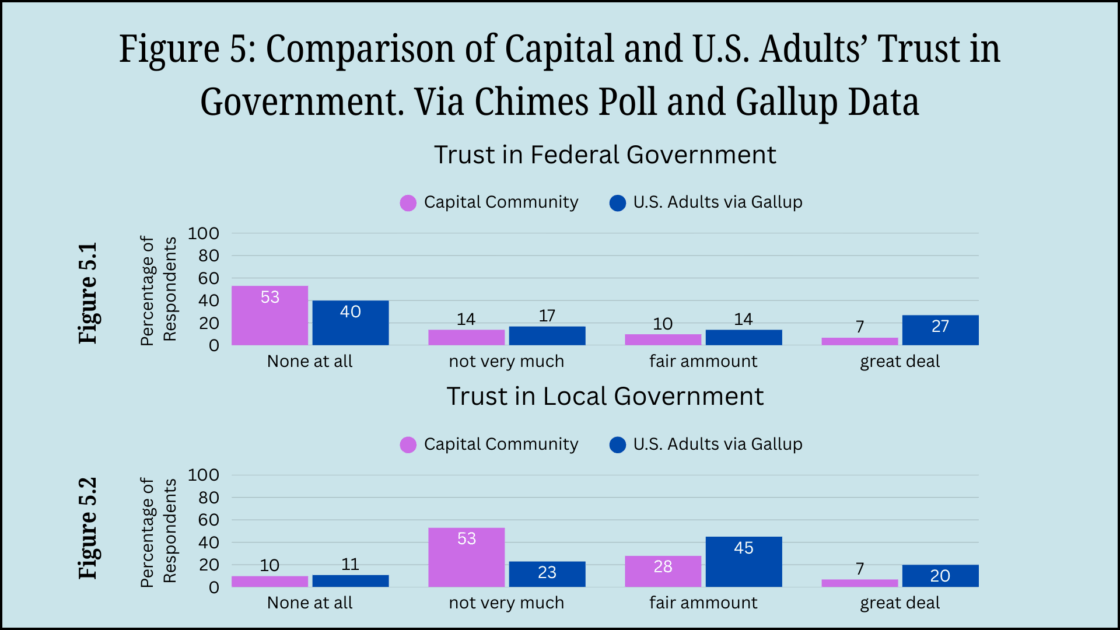
Respondents were also asked to rate their trust in federal and local government.
Trust in the federal government was low with some high outliers, while trust in local government was more evenly distributed. This is similar to national data from Gallup.
Respondents were asked what influenced their rating and what they would like to see to improve it, with one saying, “We have been [led] by weak leaders for too long, we finally have someone who is willing to do what needs to be done.”
Another said, “[R]emoval of the current admin and replaced with just and moral individuals that better represent the constitution, and aim to uphold people in power to a higher standard. Thus, encouraging a tone shift amongst media, society, and government standards.”
Despite a general hope for a better future, many expressed fear that the situation will get worse before it will get better.
When asked for any final comments, one respondent said, “I live everyday feeling like I am sitting on a damp powder keg. Everyone [thinks] it’ll explode but it is wet. There will be no explosion and things will stay the same and horrible.”