

University faculty have been discussing how to navigate conversations that build an environment where students are encouraged to share and learn new ideas — a challenge made more urgent by broad cuts to humanities programs and funding nationwide.
Ohio specifically has undergone legislation such as Ohio Senate Bill 1 (SB 1) (2025) that affects public universities by restricting diversity, equity, inclusion (DEI) initiatives, requiring tighter guidelines for faculty and mandating classroom neutrality on topics deemed controversial.
Bowling Green State University, The Ohio State University and The University of Toledo are among many institutions that have been affected and have adjusted their programs to remain in compliance with state law.
The university is a private institution that is not directly affected by SB 1 legislation but still feels the ripple effects in the humanities departments.
Faculty members in English, Religion and Philosophy, and History departments at the university are balancing the navigation of these obstacles while fostering academic freedom and open dialogue in the classroom.
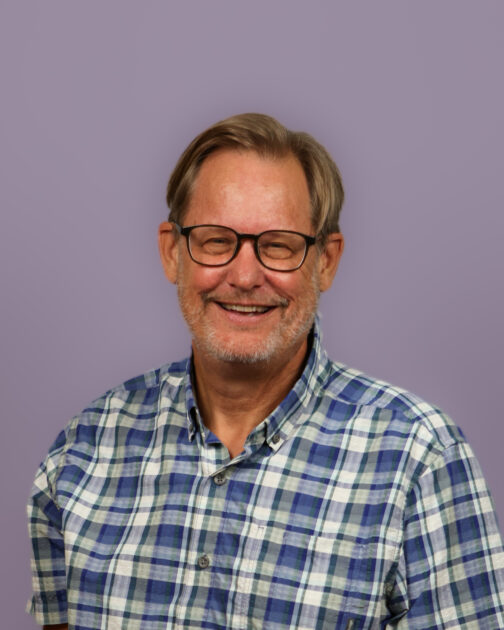
Professor Andy Carlson, Ph.D., said, “I don’t think that any area of academic inquiry is better at understanding and articulating public good than people that are trained in humanities. It’s the big picture of the human condition and trying to put things in context so that we don’t lose a sense of where we are.”
Carlson studied for his bachelor’s degree at Johns Hopkins University, then his doctorate degree and master’s degree at Brown University in race and ethnic relations history. He has been a professor at the university since 1990 and is the chair of the History Department.
Professor Angela Buck, Ph.D., is an English Department professor with a master of fine arts degree in poetry, and a doctorate degree in English with a focus in fiction.
Buck highlights the importance of personal development over diverse career paths in higher education and ensures her classrooms reflect the mission for constructive and thoughtful conversation among students.
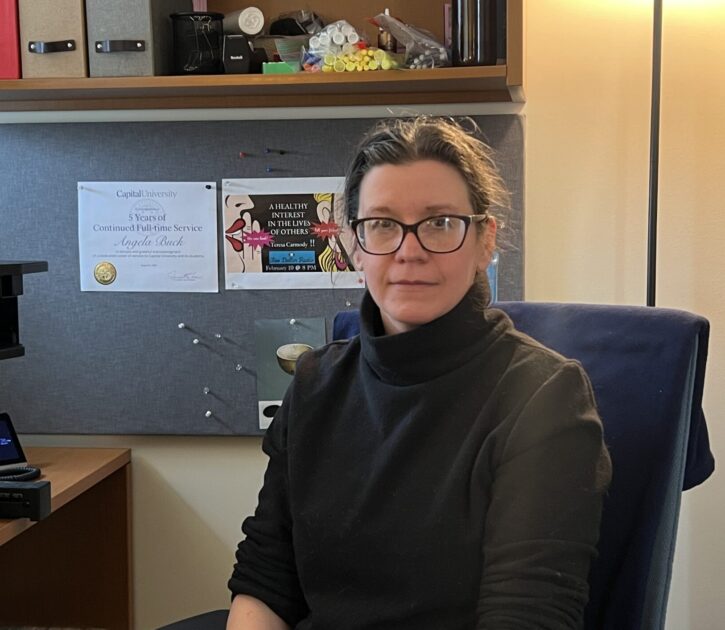
She expressed that every student has a benefit to being involved in humanities courses, even if it is not their preferred major, and said, “That kind of difficult, deep thinking that you do in a humanities degree is the very same skill set that is going to help you be a good leader [in any field].”
The university remains untouched by Ohio legislation, and classrooms have been a focal point for humanities professors to encourage respectful and open dialogue among students no matter the topic.
The university maintains their mission to foster an environment for staff and students to be expressive and welcoming, especially in departments such as Religion and Philosophy.
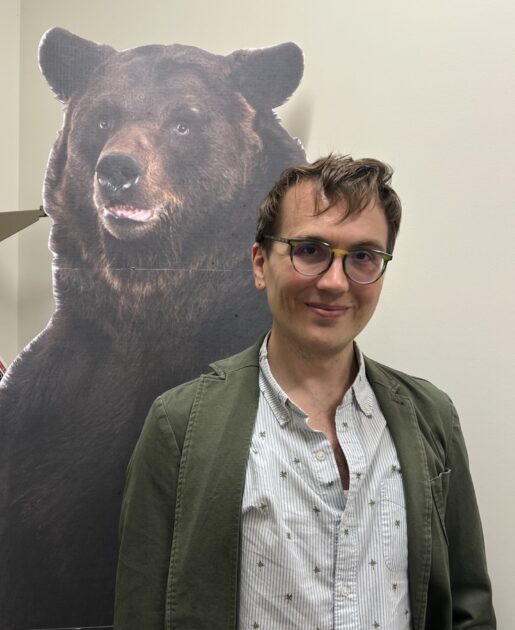
Professor Nate Whelan-Jackson is a university alum and has been a professor for almost 11 years. He is the chair of the Religion and Philosophy Department and director of the Signature Learning program.
Whelan-Jackson’s involvement at the university is reflected in the classes he teaches, from classical philosophy to disabilities studies, and the ability to facilitate complex discussions.
He said, “Our disciplines try to be attuned to [the] dialogues that are happening in the broader society, [and] different courses are being developed. In Philosophy, we’ve introduced feminism and queer theory, philosophy of race, [and] disability studies.”
He adds that these topics are in the forefront of the state policies that see these topics as controversial and seek to limit humanities “in ways that are unquestionably oppressive.”
For Whelan-Jackson and other faculty members, there is a level of collaboration between them and students that must be welcomed into academic conversations.
To do that properly, he said, “[Students] have to be able to articulate [the] point or rationale concisely, clearly and in a way that invites other people into the conversation.”
For the humanities departments, these dialogues are important for a broader understanding of what goes on beyond the classroom and can train students to adapt through social and political shifts in life.
Professor Carlson has a passion for a cultural pluralism course he teaches at the university. Over the past few years, he has revised the course content to adopt how sociology, history and perspectives of cultural, racial and gender groups intertwine.
By explaining the connection of these themes, Professor Carlson lays out ethical dilemmas and conflicts that stem from events that, to him, are more than just two sides.
“[It] empowers [students] to understand how complex the story is and how we inherit these very difficult conflicts in the United States [that students] might not want to accept … and if you don’t face the truth, it’s hard to act ethically,” he said.
Faculty members at the university feel that humanities will remain essential, despite political pressures. Professor Buck emphasizes that academic, technological and societal changes will mean humanities must adjust to stay true to the university’s mission, and such academics will always find a place in other learning spaces; it is simply a matter of how.
Professor Whelan-Jackson said, “It’s central to our mission as an institution [to] live lives in community … but at the same time, experience the world differently … That’s what it is to live in a pluralistic democracy.”
