
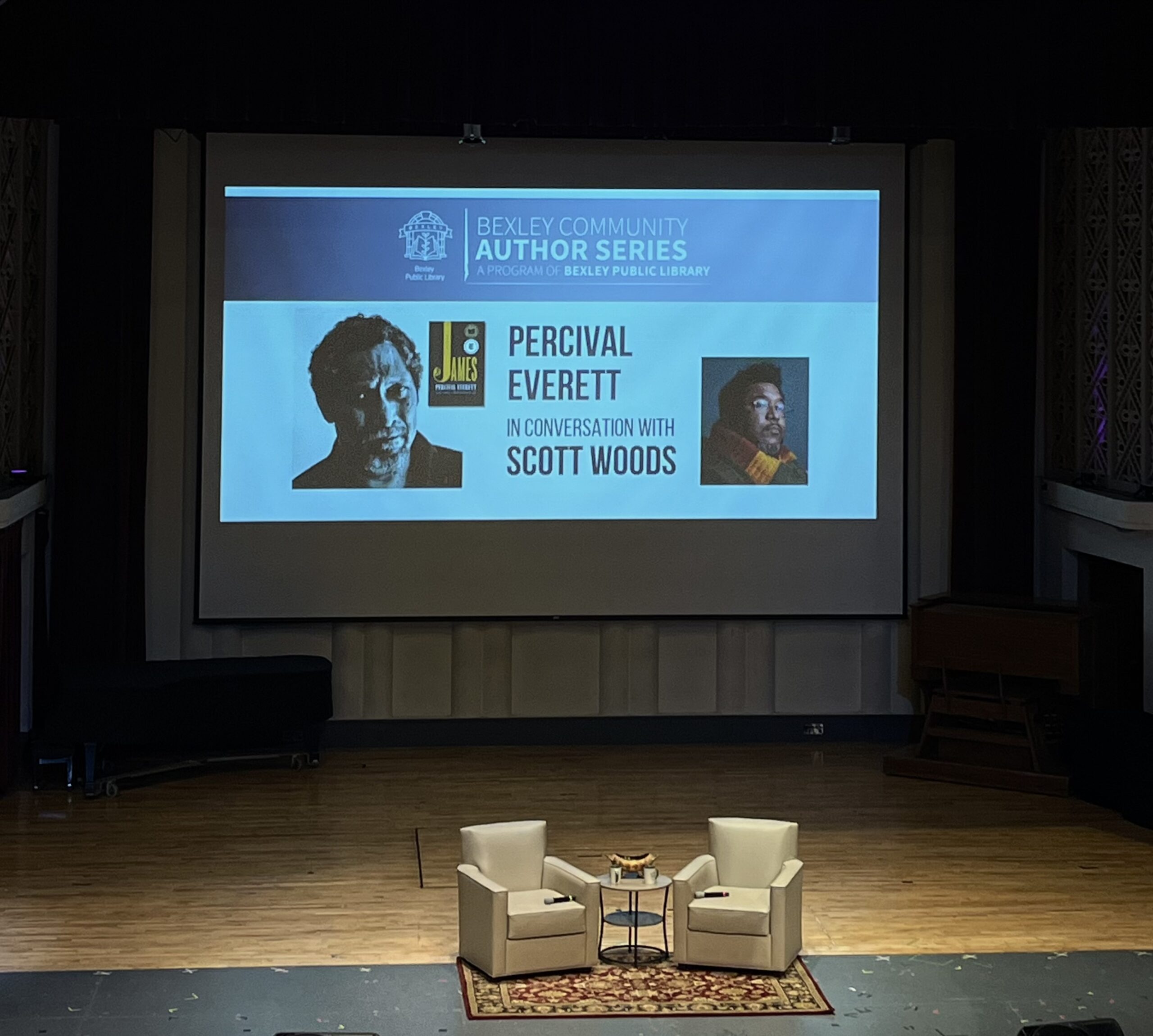
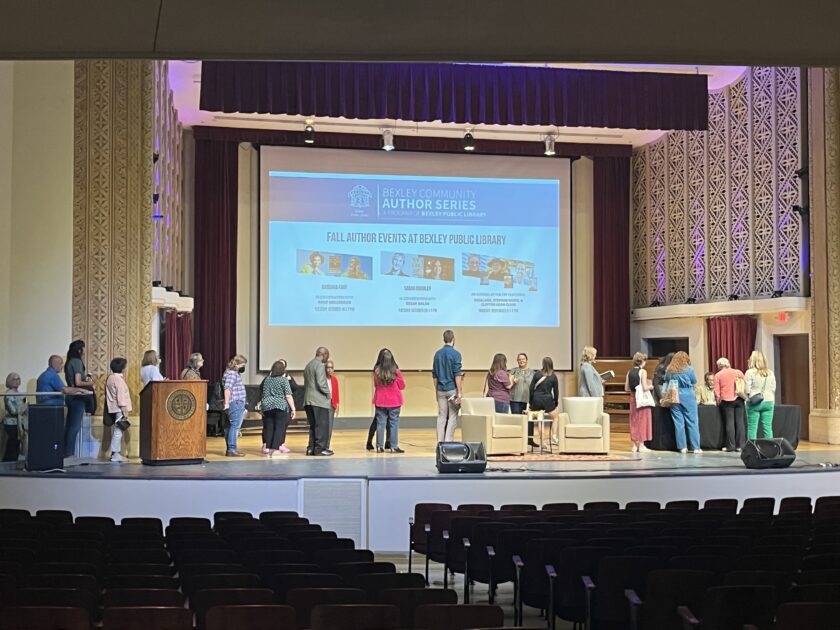
On Sep. 3, the Bexley Public Library hosted author Percival Everett at Mees Auditorium for the Bexley Community Author Series.
Everett, whose latest novel, “James,” won him the 2024 National Book Award and the 2025 Pulitzer Prize in Fiction, has published over 30 books and collections of poetry.
“James” is the story of the 1884 novel “The Adventures of Huckleberry Finn” by Mark Twain but told from Jim’s perspective. “It’s not a corrective [novel], it’s not a retelling because [Twain’s] not telling Jim’s story, he’s telling Huck’s story,” he said. “It’s a conversation with Twain, what we’re saying to each other.”
In his preparation for writing “James,” Everett read “The Adventures of Huckleberry Finn” 15 times back-to-back. “I’m pretty sick of Huck Finn,” he said. “That’s why I did it … I wanted to inhabit that world, but I did not want to, in any way, have obedience to his text.”
In turning the original text into “nonsense,” he was able to immerse himself in the story without focusing on Twain’s prose. “I had an idea of this world, but I know I wasn’t thinking about his language,” Everett said.
Everett has found success primarily with his novels, but he has also published seven collections of poems. “I am a terrible poet,” he said. “One day, I will stumble onto a good poem, and that’s why I keep doing it.”
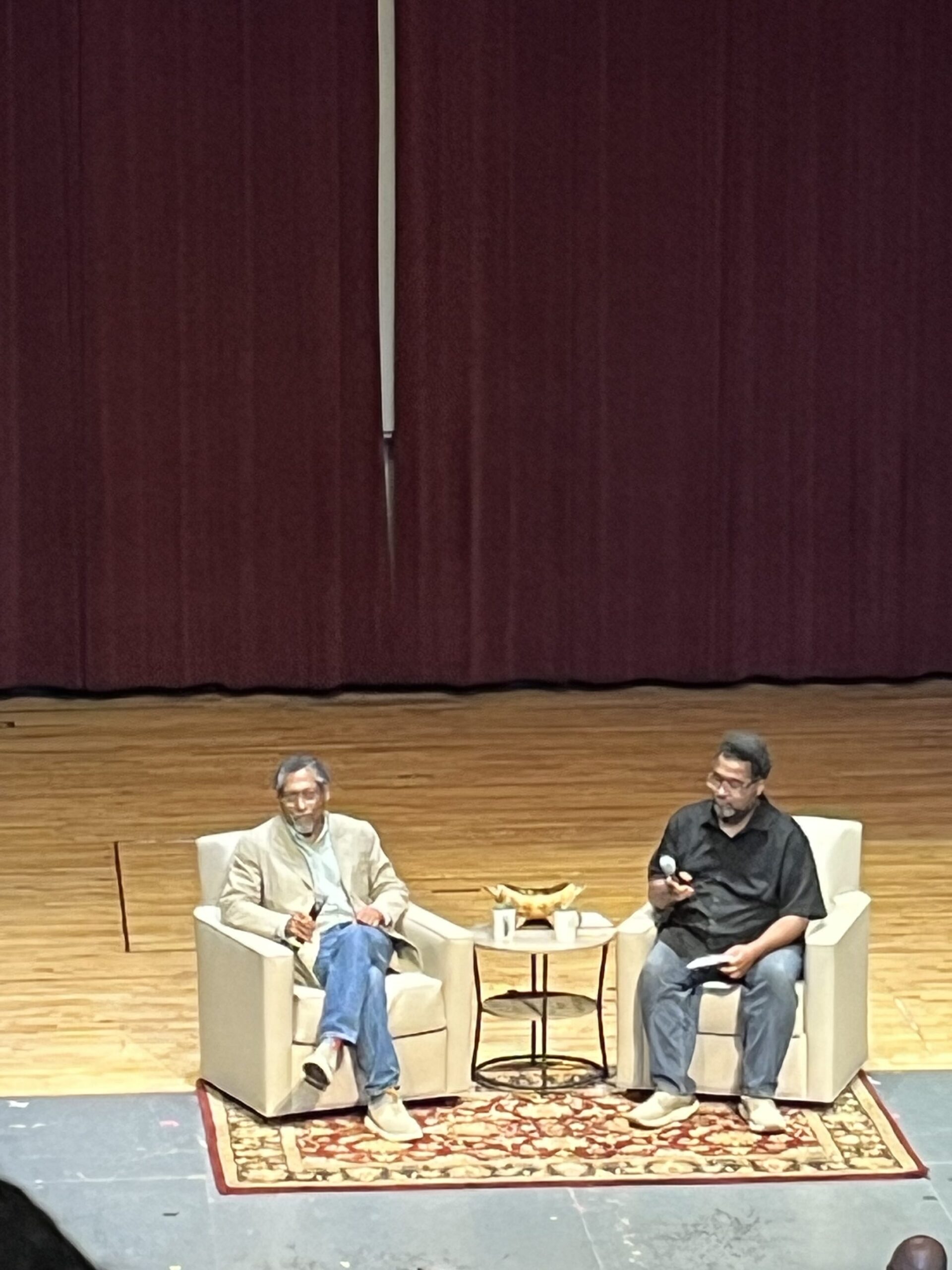
The event was in conversation with Scott Woods, a local Columbus poet, who has published several books. They discussed a multitude of Everett’s past novels, including his 2001 novel “Erasure,” which was adapted into the 2023 film “American Fiction.” Everett was not a part of the adaptation process.
“It’s not my novel; it’s his movie,” he said. “I think it’s a really fine piece of work.”
The film rights for James were bought in 2024 by Steven Spielberg and Universal Pictures with Everett to write the screenplay and executive produce. “I’m done with my part; it’s in their hands now,” he said.
Everett has written several novels exploring the nuances of race relations and the effect of slavery in America. “History is one that white Americans own as much as Black Americans,” he said. “The work should not be an expression of victimhood; it should be an attempt to understand the ugly history of this nation.”
He is often asked for his thoughts in response to questions about what his book means, to which he does not have an answer. “I make books; I don’t make meaning,” he said. “That’s what readers do.”
Woods discussed art and the conversation about art being threatened. “Art’s always been under attack,” he said. “The real fear I have is how education is under attack.”
Everett said, “How will it be valued? I want a population of people around who want to consume art.” Everett believes people will continue to make art. “There are people who express themselves … how [art] is received and the importance it’s given is going to vary from culture to culture,” he said.
“Nobody’s allowed or not allowed to create art.”
