
For over 50 years, the slasher genre has found its way into the hearts of horror fans, producing some of the most watched movies during the Halloween season.
The genre has even made a comeback, with at least five slashers released just this year, such as “Hell of a Summer” and “Heart Eyes.”
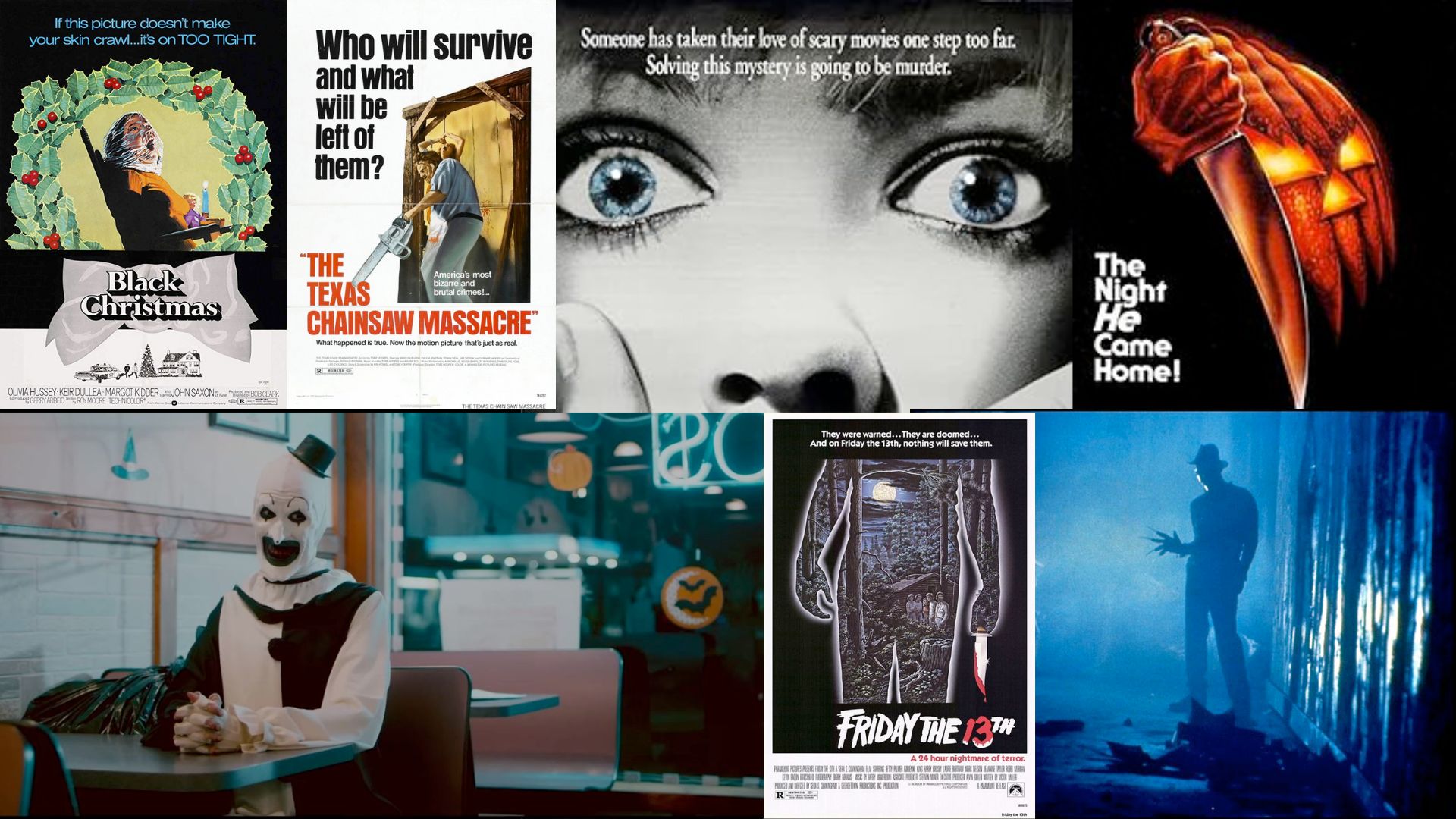
While it has been debated what the first slasher movie was, “Black Christmas” and “The Texas Chainsaw Massacre” were used as blueprints during the rise of slasher movies.
Here is the evolution of the genre:
The originals
“The Texas Chainsaw Massacre” and “Black Christmas” were both released in 1974 within weeks of each other (although “Black Christmas” wouldn’t be released in the United States until Dec. 20) and subconsciously established the formula for the slasher genre.
Slashers are different from other horror genres because they (usually) follow a main antagonist killing off a group of young adults one by one until there is only one person (usually a female) remaining, who ends up escaping and/or defeating the villain.
In “The Texas Chainsaw Massacre,” a group of young adults are killed off by a family of cannibals. Despite the whole family participating in the killing, the main antagonist is Leatherface, a chainsaw-wielding maniac who wears a mask made from the flesh of his victims.
By the end of the film, only one of the young adults is able to escape the family.
“Black Christmas” follows a similar plot where a psychopath (much more terrifying than Leatherface) named Billy kills off girls living in a sorority house together, and only one of them survives.
While Billy doesn’t wear a mask like Leatherface, we never see his full face.
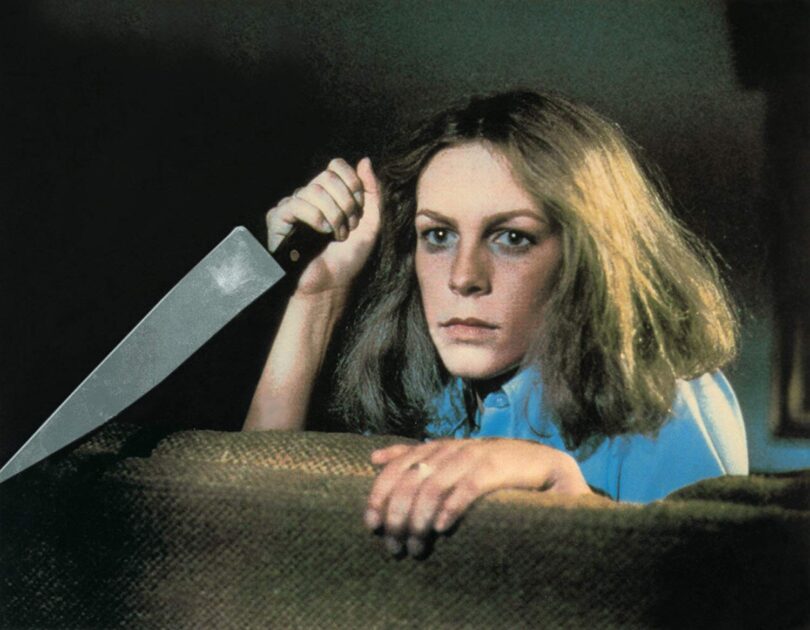
In 1978, John Carpenter used these same elements in “Halloween,” a film about an escaped mental patient, Michael Myers, killing off teenage girls (and one of their boyfriends) one by one on Halloween night.
The opening scene of “Halloween” uses a point-of-view (POV) shot showing Myers’s perspective; this was a technique used heavily in “Black Christmas.” Myers also wears a mask, similar to Leatherface.
Also similar to “The Texas Chainsaw Massacre” and “Black Christmas,” the protagonist who survives is a female, solidifying the “final girl” trope that had been suggested in previous slashers.
While “Halloween” wasn’t the first slasher, it was the one that set the rest of the genre in motion.
The ‘80s slasher
“Halloween” was an extremely successful film and was for years “the most successful independent production in history.” Studios saw the film as an opportunity to make money, so in 1980, “Friday the 13th” was released. Essentially, it was a remake of “Halloween” set at a summer camp.
The film opens with a shot from the killer’s POV, a group of teens are killed off one by one, and the main protagonist is a final girl.
There was little originality in “Friday the 13th,” but it expanded on an element of the slasher film that was introduced in “Halloween.” Almost every character who dies in “Friday the 13th” engaged in some sort of sexual activity right before they died; the final girl is the only one who did not engage in sexual activity.
While only two people in “Halloween” died after sexual activity, “Friday the 13th” saw that as an opportunity to make a statement about teenage sex. From this film on, slasher films were notorious for their sexual content.
The rest of the “Friday the 13th” franchise had even more sexual content than the first film, and the killer, Jason Voorhees, wore a mask like Leatherface and Michael Myers.
“Friday the 13th” did not see the same success that “Halloween” did; “Friday the 13th” cost around $200K more to make and made around $10 million less worldwide, but it still had moderate success. One moderately successful slasher and one extremely successful slasher were enough for studios and independent filmmakers to make an excessive number of slashers, with most of them having at least one sequel.
Released in 1984, Wes Craven’s “A Nightmare on Elm Street” was not a copycat of “Halloween,” or “Friday the 13th,” and was instead a fresher take on the slasher genre; unfortunately, it ended up resorting back to the standard slasher template in the sequels as well.
The “I’m just gonna make ‘Scream’ again” slashers
The early ‘90s did not see new slashers being made unless they were sequels to ‘80s or ‘70s slashers; however, in 1996, one new original slasher was made that revived the genre. Wes Craven found another success with “Scream.” The film grossed over $6 million opening weekend (over $12 million in today’s money).
“Scream” used all the classic slasher tropes, but it criticized and paid tribute to the tropes in a comedic fashion. It also had several moments that were scarier than almost every slasher from the ‘80s.
Studios saw the success and self-awareness of “Scream” and tried to make every new slasher like it. Even sequels became “Scream” ripoffs, such as “Halloween: Resurrection” and “Bride of Chucky.”
Perhaps the most blatant “Scream” ripoff was “I Know What You Did Last Summer.” While it was moderately successful, it was not as successful as “Scream,” and it fell into the same slasher trap, generating multiple poorly-received sequels.
“Urban Legend” and “Disturbing Behavior” are among the films that tried to emulate “Scream” but failed. Ultimately, no slasher would be as successful as “Scream” for the next decade or so.
The postmodern slasher
It seemed no slasher would ever be as successful as “Scream” and everything that came before it, so filmmakers started making slashers that were self-aware but in a discreet way. They would not just use slasher tropes but elements from the specific slashers that used them.
“Fear Street: 1994” could be seen as the modern “Scream” because of the stylistic choices it makes, but the film itself is not “Scream” at all.
Another example of this kind of slasher is Ti West’s “X,” a film that on the surface seems like a copy of “The Texas Chainsaw Massacre,” but as the film progresses, it becomes so much more thematically and technically.
“Terrifier” could be seen as a modern “Halloween” with a touch of “A Nightmare on Elm Street,” and “Hell of a Summer” could be seen as a modern “Friday the 13th.”
These films combine both modern techniques and older techniques that come from the first run of slasher films. Through pure influence, the movies avoid becoming mere copies of previous slasher films.
The postmodern slasher, like “Scream,” is a sign that slashers are heading the right direction once again.