
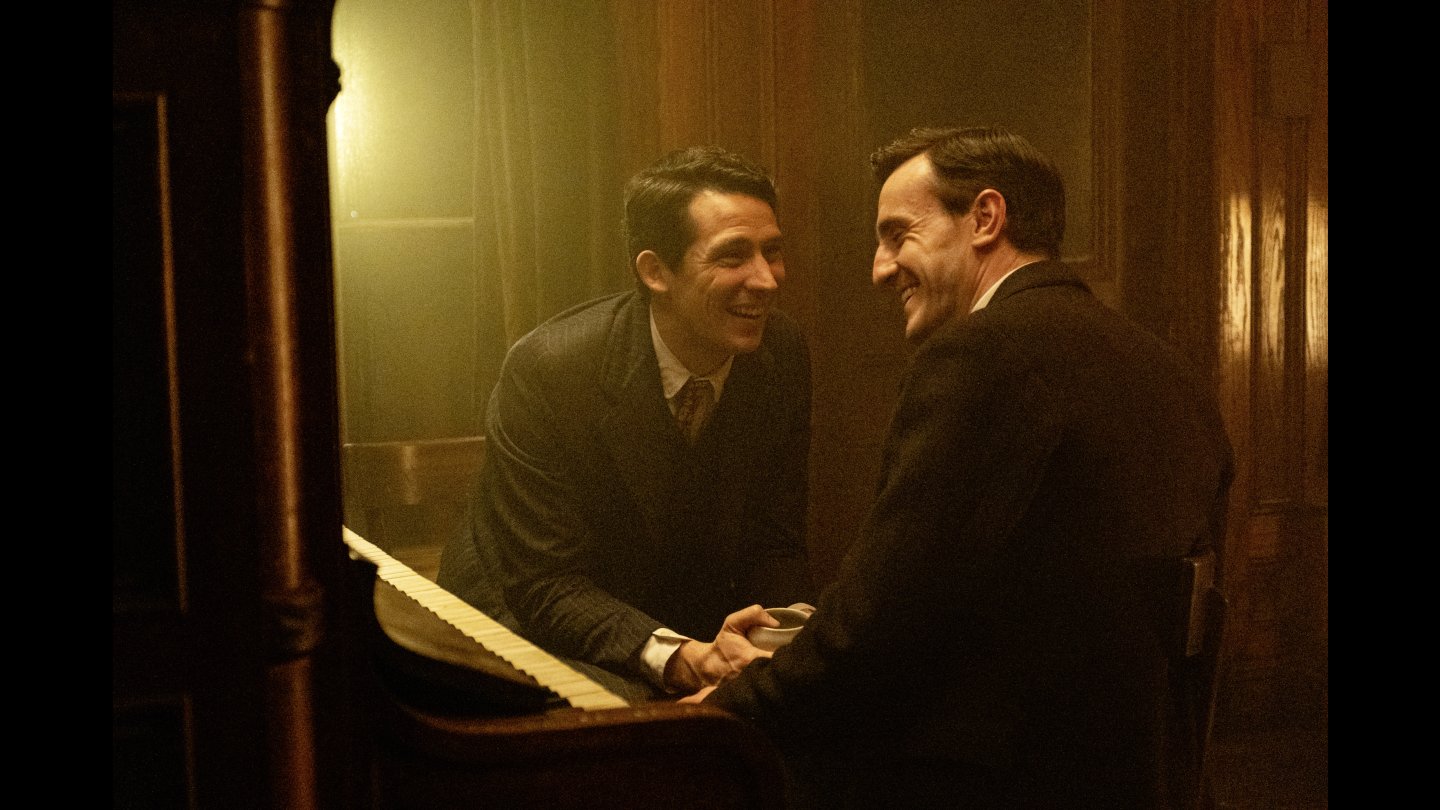
“My grandfather once said that happiness isn’t a story. So, there isn’t much to say about those first weeks.”
“The History of Sound” is the newest film from Oliver Hermanus and his sixth feature film. The film is based on two short stories by Ben Shattuck, who also wrote the screenplay.
The film stars Paul Mescal and Josh O’Connor as two music students who meet shortly before World War I. It also stars Academy Award-winning actor Chris Cooper, who plays an older version of Mescal’s character.
It’s 1917 at the elite Boston Conservatory. Lionel Worthing (Mescal), a Kentucky farm boy and music prodigy, meets a fellow student named David White (O’Connor), a musicologist. Together, they bond over their shared love of folk music.
O’Connell and Mescal have a sweet and intimate chemistry between them that grows during their time at school, though once World War I begins, David is drafted and deployed. Lionel, who couldn’t be drafted because of his eyesight, returns to Kentucky after the conservatory closes, and he chooses to put his music aside to help run his family‘s farm.
Two years later, Lionel receives a letter from David telling him that he has returned from Europe, and he’s working at a college in Maine. He’s about to depart on a trip across the state to collect folk songs, and he asks Lionel to accompany him.
They trek through winter on foot around rural Maine, asking those they meet if they have a folk song, recording them on wax cylinders.
Lionel and David renew their relationship on this trip, and much of their time is spent walking. They talk and walk in silence, but mainly, they sing.
Neither Mescal nor O’Connor are trained singers, but their voices as they harmonize traditional folk songs are poignant.
Eventually, Lionel and David have to part again. Lionel travels to Europe and writes letters to David for a year with no response.
There are many parts of the movie that are slow moving with minimal dialogue. Rural Kentucky does not offer a dramatic environment, but this movie doesn’t need it.
Cinematographer Alexander Dynan uses sweeping wide shots of the Kentucky countryside and the backwoods of Maine that never linger too long and add depth to an already emotional and intimate film.
“Woven into an affecting, predominantly string score by Oliver Coates, the music interludes are without exception sublime, including those sung tunefully but with more gusto than vocal skill by O’Connor and those invested with full-throated feeling by Mescal,” said David Rooney, a film critic from The Hollywood Reporter.
Each song captured is arranged beautifully but there is one that stands out on its own. The film is bookended with the song “Silver Dagger” by Joan Baez.
While the origin of the song dates back to the early 19th century, Baez’s version is most well-known, and serves as the version of the lyrics that the film uses.
It is the first song that Lionel sings in the film, and while it is beautiful the first time, when it is heard again at the very end of the film, it’s somehow even more devastating.
This film is a restrained yet striking exploration of human connection.
Though this film shows the love between two men, the crux of it lies in the journey of preserving these songs and showcases the connection that music creates between people.
In the end, it is a sentimental and melancholic queer love story that manages to capture the beauty in a journey of preservation.
“What happens to all the sounds released into the world never captured?”
