
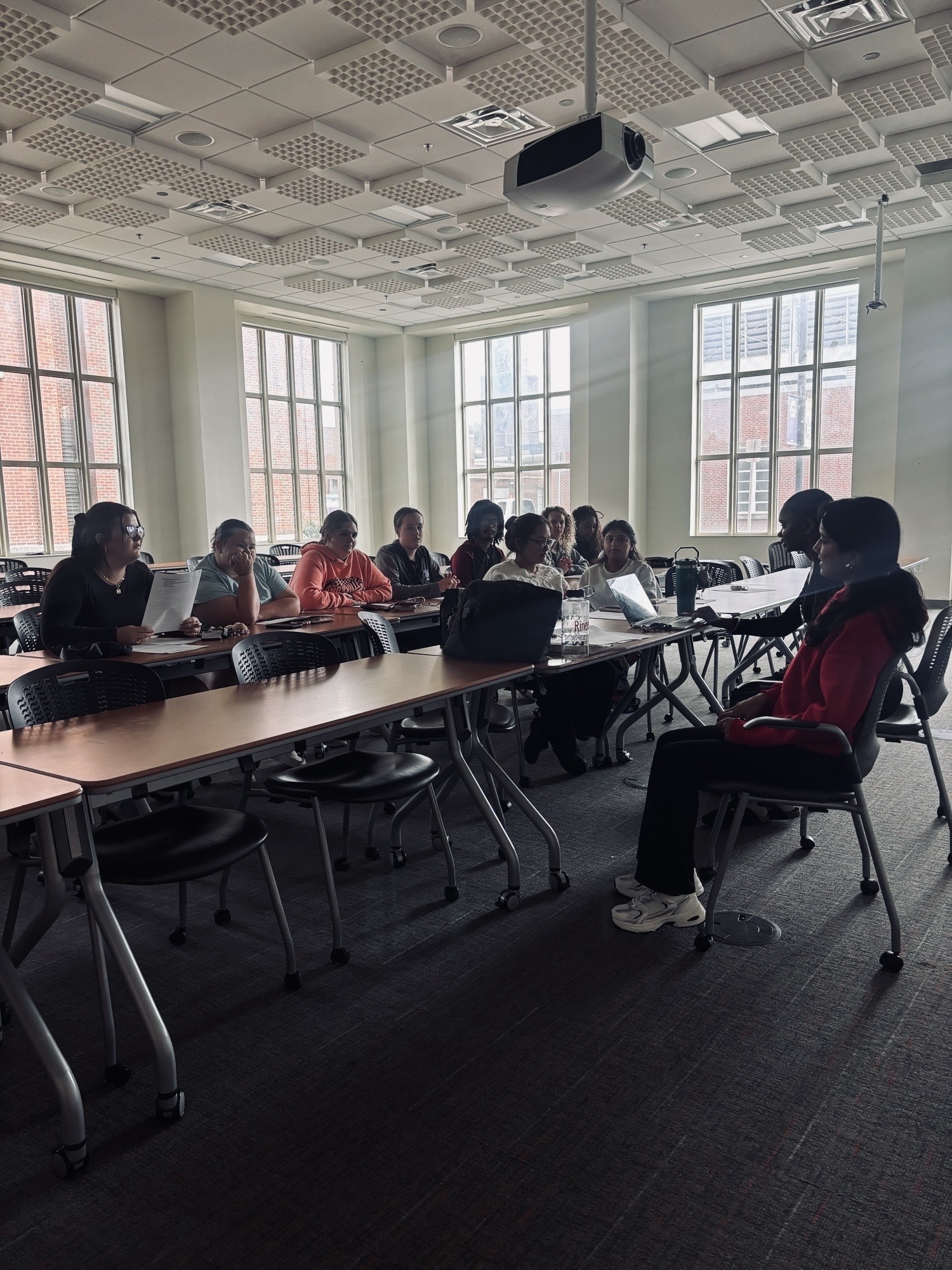
On Sept. 18, the university debate team hosted an open discussion on political violence and the state of free speech in the wake of Charlie Kirk’s assassination.
Led by the debate team’s new director, Clint Jones, Ph.D., the meeting discussed an increase in political violence across the country, the state of our country’s political system and the importance of free speech and public forum.
This discussion comes at a moment when Americans believe political violence is seemingly on a rise. In a recent AP-NORC poll, 42% of United States adults said they were “extremely” or “very” concerned about the possibility of increased political violence directed at political figures or election officials in the aftermath of the presidential election.
Several events following the presidential election have further ignited concerns of political violence and its place in the U.S.
On July 14, Democratic former Minnesota House Speaker Melissa Hortman and her husband, Mark Hortman, were killed in their home by an assassin. Two months later, on Sept. 10, political commentator Charlie Kirk was shot and killed during a public speaking event at Utah Valley University.
Politicians across the political spectrum have used these acts of violence to push agendas, with conservative political figures like Rep. Nancy Mace R-S.C. pointing blame at left leaning politicians in a statement shortly after Kirk’s shooting. “Democrats owned what happened today. Just because you speak your mind doesn’t mean you get shot,” Mace said.
Following the passing of Charlie Kirk, Pennsylvania Gov. Josh Shapiro spoke about his right-leaning political colleagues stating, “Unfortunately, some — from the dark corners of the internet all the way to the Oval Office — want to cherry-pick which instances of political violence they want to condemn.”
When discussing political violence during the public discussion, professor Jones said, “It’s one of the most immediate issues that we have to contend with in this country. Anytime you engage in public discourse, you run the risk of violence, whether it’s a shooting or whether it’s being attacked.”
Jones also spoke about the importance of not letting violence disrupt our civil and political engagements. “I think that on one hand, public discussion helps people sharpen their own ideas, their own beliefs, and allows people to deal with their feelings. It models the right way to go about things.”
To Jones, keeping the integrity and concept of fair and honest debate works to help in reducing how heated and controversial our political system has become. Not only is it the foundation of the debate club, but it also remains the foundation of the country itself.
Political violence may try to disrupt this process and frighten others; however, keeping this exchange of ideas is vital for the preservation of debate.
“If we create these moments for people and give them the opportunity to even just sit and listen,” Jones said, “it might be what someone needs to be able to go home and say, ‘Maybe I am thinking about this all wrong.’”
This is a sentiment held by other political figures looking to alleviate conflict following tragedies; one of these figures, Sen. Bernie Sanders, addressed Kirk’s death in an online statement:
“A free and democratic society, which is what America is supposed to be about, depends upon the basic premise that people can speak out, organize and take part in public life without fear — without worrying that they might be killed, injured or humiliated for expressing their political views. In fact, that is the essence of what freedom is about and what democracy is about.”
