
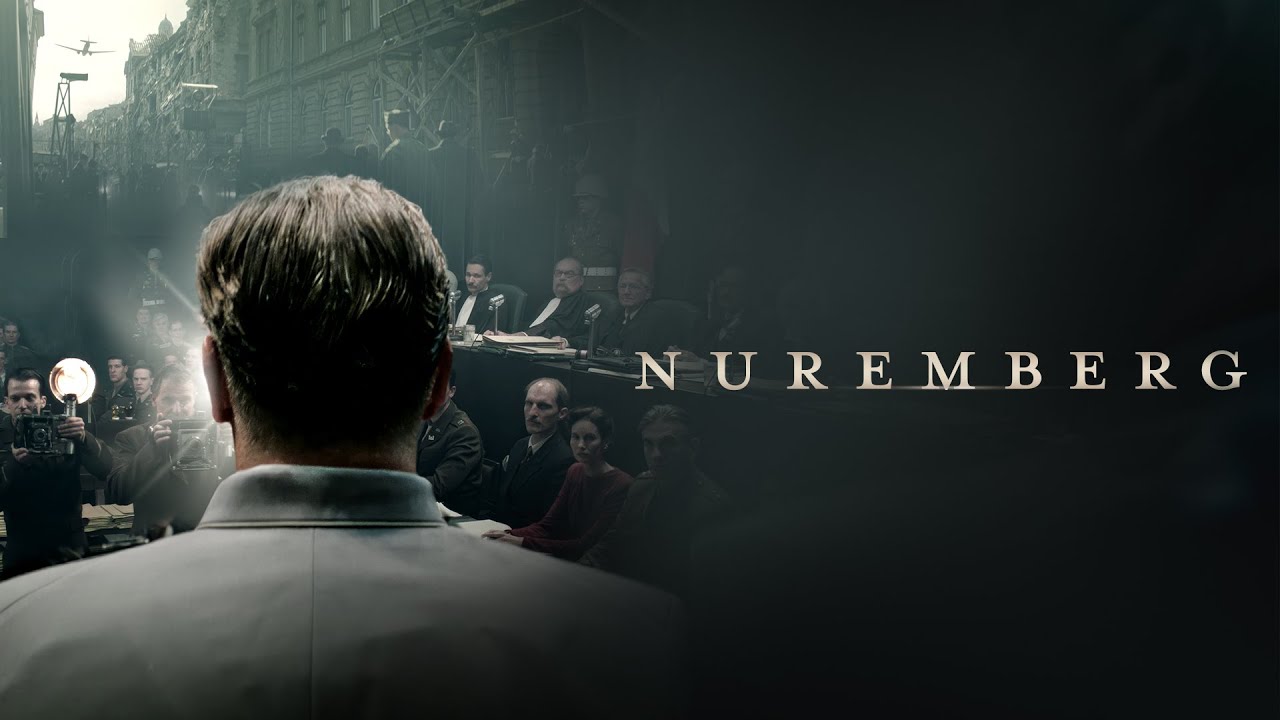
James Vanderbilt’s newest film, “Nuremberg,” is a dramatic retelling of the Nuremberg Trials, in which the Nazi high command was prosecuted for war crimes they committed during the war. In this intense courtroom drama, the search for justice produces a haunting question: does evil arise from monstrous intent, or from ordinary people choosing to take part?
The film’s core message states the individuals who committed these atrocities were not unthinking, barbaric creatures, but human beings; which means human beings have the ability and responsibility to hold them accountable.
The Nuremberg Trials were a series of military tribunals held after World War II to prosecute prominent Nazi leaders for atrocities. The crimes the defendants could be charged with were: crimes against peace, war crimes, and crimes against humanity.
This was a radical move at the time, as there was no legal precedent for holding individuals accountable for state sponsored atrocities, and so the success of the trials was far from a guarantee.
The biggest fish in the trial was the highest remaining Nazi commander, Herman Göring, played by Russell Crowe; the prosecutors focused on Göring because if they could implicate him, the whole proceeding would gain legitimacy.

The film is based on Jack El-Hai’s 2013 book, “The Nazi and the Psychiatrist,” which detailed army psychiatrist Douglas Kelly’s evaluation of the captive Nazi leaders prior to the trials, particularly Göring.
Göring became an object of obsession to Kelly—the two would play mind games on each other for hours. In one heated scene, Göring compares himself to Alexander the Great, to which Kelly replies, “You are not Alexander the Great! You are a fat man in a cell!”
Through exchanges such as this, Vanderbilt shows Göring’s egotism and continued belief that the war had truly been about protecting Germany. Göring saw Alexander the Great as super human, but even Alexander was ultimately just a man.
Kelly, portrayed by Rami Malek, was tasked with evaluating the prisoners’ psychological conditions, and later wrote a book about what he learned. Kelly thought understanding the psychology of the Nazis could help prevent future atrocities.
Malek told History Hit, “[Kelly] was trying to dissect evil and he had such conviction to do so. So when he discovered this banality of evil, I think he was really thrown and he could see these people as human beings and that’s what he equated them to.”
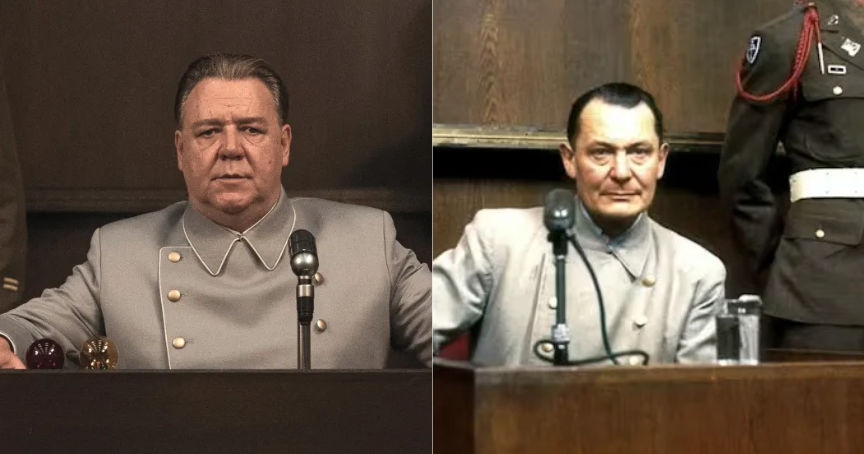
The term “banality of evil” used by Malek was coined by philosopher Hannah Arendt in her book “Eichmann in Jerusalem: A Report on the Banality of Evil” about another famous Nazi war crime trial.
Her concept suggests that ordinary individuals can commit horrific acts not out of deep malice, but through blind obedience, lack of moral strength or simple thoughtlessness.
In her book, Arendt said, “Except for an extraordinary diligence in looking out for his personal advancement, he had no motives at all…That such remoteness from reality and such thoughtlessness can wreak more havoc than all the evil instincts taken together which, perhaps, are inherent in man.”
Vanderbilt’s film displays a clear understanding of this: these imprisoned Nazis are a far cry from goosestepping boogeymen; instead, these villains are a mix of raging antisemites, sniveling cowards proclaiming their innocence, and ego maniacs who only seek to control others.
Like Arendt described, they all had one thing in common: they attached themselves to the Nazi party to advance their personal goals, whether they be gaining status or wealth or promoting antisemitism.
The film does not seek to redeem or give grace to the Nazis; it reminds the viewer that evil is not always one’s nature, rather it is what one becomes as a result of their choices.
Vanderbilt told The Guardian, “One of the fascinating things about Göring was that he was funny, gregarious, charming,” says the film-maker. “He loved his wife and kids – which to me makes him even more terrifying. He wasn’t Darth Vader, you know? But he craved power and was comfortable with other people suffering so long as he could maintain that power.”
At the climax of the film, the banality is replaced with pure patheticness, as the humanness of the prisoners forces the audience to confront a painful truth: if these men were simply human beings, then perhaps anyone could be capable of such terrible things?