
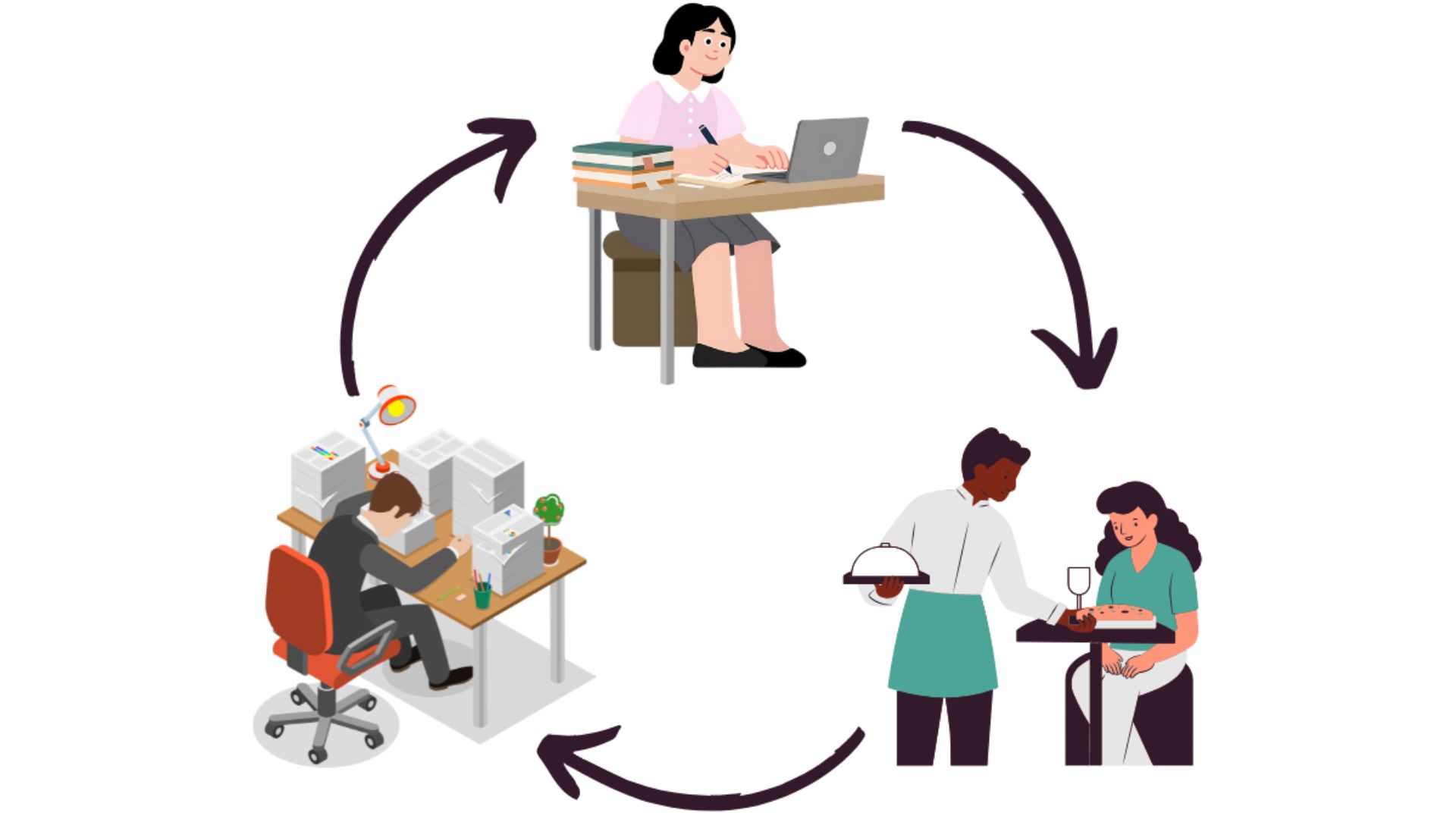
University has become a multiple-job system for enrolled students and working faculty.
While this burdensome balancing act of responsibility affects everyone, the university seemingly tends to be more accommodating to one group over the other.
With many students working 30–40 hours per week on top of a 15-credit-hour-or-more class load, as well as faculty teaching multiple classes a week, grading assignments and thinking about side-gigs, many students and faculty can struggle to keep a balance or see this work issue from the other perspective.
Finding out the hours they work or study — and the effect it has — is critical to understanding the other side.
According to Lumina, 60% of full-time college students work while juggling class loads, and 40% work full-time, as well.
Melody Crigger, a senior exercise science major, works three off-campus jobs during her full-time student status.
As a yoga instructor, receptionist and fitness teacher, she juggles many responsibilities. Before her time at the university, Crigger attended Columbus State Community College, earning an associate degree.
“I was overwhelmed with the differences between the two schools, and I was trying to lead teacher training programs, teach, and hire new staff while taking 18 credit hours,” shared Crigger. “I ended up having to step down, which made me really sad because I loved the position and it paid well, but my grades were heavily affected.”
Another student, senior history major Luke Golden, works up to 30 hours a week with his three jobs: the university archives, the Schumacher Gallery and Market District.
Golden implies he maintains a high GPA but sacrifices personal life, well-being and experiences, even stating, “I often miss a lot of events for my fraternity and fun things my friends are up to because of work. During busy weeks, it forces me to get my coursework done at night, which sacrifices sleep. That particularly hurts when I have to be up early the next morning to work.”
These trade-offs and burnout can also be a hidden battle many students are fighting.
Crigger expressed that many students in her position, particularly upperclassmen, can feel immense pressure to hide their struggles or feel judgment on academics, when in reality, students struggling with work-school balance simply don’t have the time to study.
Golden also spoke on this issue, saying, “I think so many people are forced to maintain a level of professionalism because of the expectations work puts on us. When we are finally off, people may feel the need to pretend that they are holding together, when in reality they are behind, tired, hungry and stressed.”
Both students also expressed that while school was their top priority, they have missed office hours, valued study time, or even classes. They also agreed the university does not support working students to the degree they need.
One student said working students often struggle with unaccommodating scheduling, with shorter frequent classes only offered in a specific semester — a working student’s nightmare. The other student claimed even just extensions on papers and projects would go a long way.
On the other side of things, AAUP reports 68% of university faculty hold contingent, part-time, or side-gig types of employment for extra income.
Neal Schmitt, head of the university’s music technology program, works two freelance jobs on top of his career at the university.
Working as an audio assistant at sporting events and a professional audio engineer for artists, Schmitt says his reasons for other responsibilities are for additional spending money and to maintain contact with professional industries.
Even with shifts in some side-gigs running a minimum of 10 hours several times a month, he gives priority to his teaching.
“It all has to be around what I do at the university, right? So the sad part is, there’s not very many professional sports in the summer … When I have the most time is usually when I’m not needed, and the busy times are the busy times …” Schmitt said. “So it often is the other way; I have to say no to gigs because it interferes with my [university] job.”
Many university instructors with other responsibilities have other motivations, such as personal fulfillment, professional goals, or, in Professor Andy Carlson’s case, service.
Carlson, head of the university History department, expresses this, saying, “For about 15 years, while I was doing other things, I was also director of a nonprofit in East Africa … and also, I’ve been on 10 nonprofit boards, so that’s more. None of them are paid. It’s more community service.”
He works all seven days a week with all of his commitments, dedicating eight to 14 hours per day on typical work days and four to six hours per day on weekends.
When asked about how the university accommodates work loads like these, both instructors agreed it adequately supported them in their off-campus endeavors.
“I think they provide the flexibility for that kind of stuff,” stated Schmitt. “This is directly related to what I do, soo it’s very much akin to continue to practice and see what’s relevant”
This miscommunication between students and faculty workload lies within the unknown responsibilities they don’t show, leading students to be upset with working instructors for late grading or faculty not accepting the absence of a struggling student.
Instructors and staff are expected to be busy while students are expected to be primarily focused on their studies. The truth is that there is much more going on outside of the classroom that is overlooked by both sides.
