

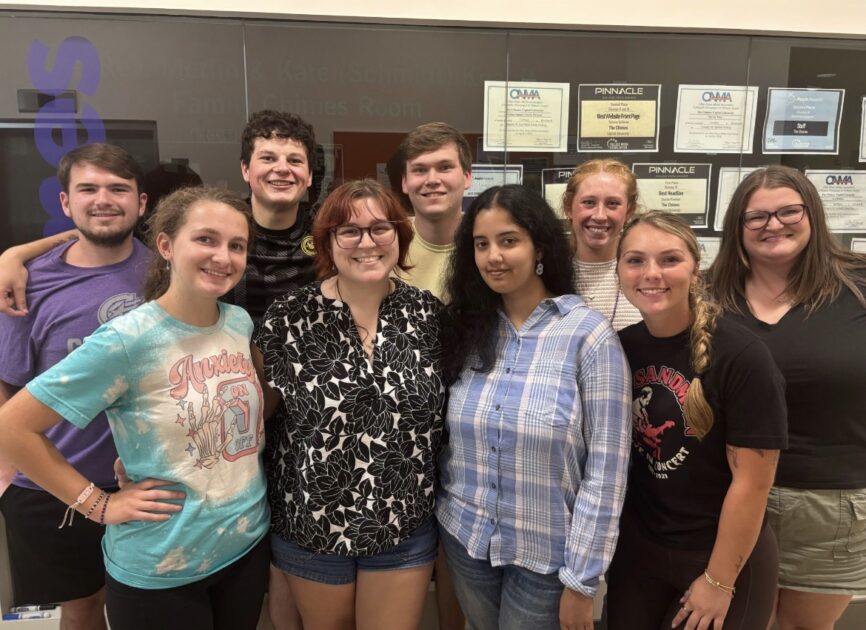
As a student-run organization, the Chimes is reshaped by a new staff every year. No two years are the same, and each group brings its own priorities and perspectives. Still, a shared philosophy connects the paper’s generations of student journalists. That philosophy can be understood through three elements: purpose, policy and product.
Purpose
The Chimes has had a clear sense of purpose since its founding in 1926. The paper was created in response to calls to improve “the Spectator,” the university’s old literary journal and news combination, which took several weeks to print, meaning the news section was often out of date.
Founder and first editor-in-chief, Adrian Pfiepher, explained the purpose: “It has, therefore, been decided to introduce a new publication in the form of a newspaper that will come out every two weeks, giving to the students and to the alumni the news that they have for a long while been asking for.”
From the beginning, the Chimes has been built by students for the university community. Over time, that purpose has expanded to create originally unintended positives for the institution. Published articles become part of the university’s historical record, as the Chimes archive has become a go to primary source for anyone doing a project involving university history.
Policy
While purpose explains why the Chimes exists, policy defines how it operates. In decades past, when a new editor-in-chief took over paper leadership, they would write a short piece to explain their vision for the Chimes’ policies and plans.
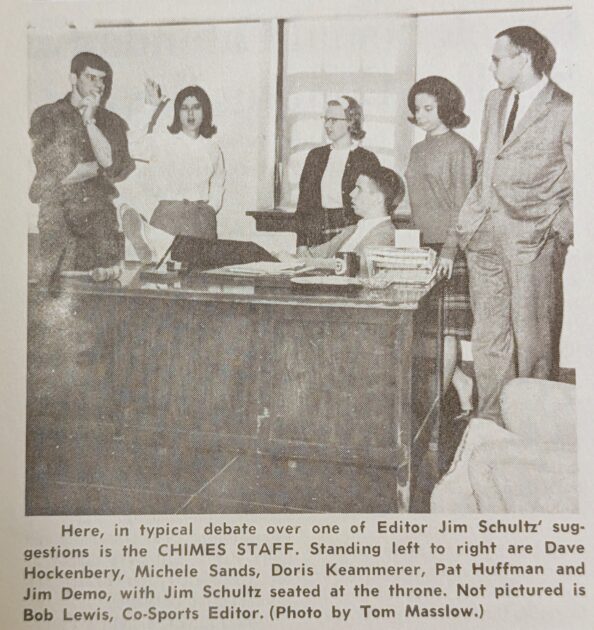
One editor-in-chief, Jim Schultz, wrote, “Hopefully, the CHIMES will be as much a journal of opinion and ideas as a fact sheet. We are not going to degenerate into a publicity organ … We have an obligation to evaluate and criticize topical situations and we intend to do just that to the best of our ability.”

As Schultz explained, there is a defining line between journalism and promotion, and the Chimes seeks to stay firmly on the journalism side. This approach requires discernment, as reporters and management staff must know not just what is newsworthy but also how it is covered.
Coverage decisions are just one issue student journalists must be attuned to. Another concern is the complicated balance of handling stories about administration, who funds the papers’ publication.
Co-Editor Chris Martin wrote about this in 1984. “The Chimes is not independent. Because Capital University underwrites most of our budget, it is our publisher. This arrangement presents a classic Catch-22 situation that plagues many college newspapers. The newspaper is expected to be the “watchdog” of the university, while it must also report to its publishers.
Despite this “Catch-22,” the Chimes strives to uphold high journalistic standards and report all of the facts of any story, no matter its subject.
Martin shared this sentiment when he concluded, “In our opinions and editorials this year, we must be the watchdog that doesn’t bite the hand that feeds us. At least we shouldn’t bite too hard.”
The Chimes’ standards such as source requirements and formatting have gotten higher to better reflect professional journalistic standards. This is intended to produce higher quality content for the university community and to better prepare reporters for the professional world.
Product
The Chimes’ published articles are a reflection of its purpose and policies, and the people who devote their time to the organization.
A 1981 staff editorial explained a strength of the student involvement: “The Chimes itself reflects diversity. Students who work for the paper come from different backgrounds and experiences and project this uniqueness in their writings. Almost anyone can find something in the paper with which to identify.”
That remains true today. Each story is shaped by the backgrounds of the staff and the time they live in, making the Chimes a mirror of the university community. Regardless of the subject, the focus remains on relevance and connecting broader stories back to the university community.
Philosophy
Together, the purpose, policy and product tie together to create a core philosophy: to question, to inform and to connect. The Chimes is one of the oldest student organizations still active in the university and thus has a strong commitment to its welfare.
1966 Editor-in-Chief Michele Sands explained another component of this philosophy: “We believe in Capital University and the individuals in it. Too often we become trapped in the bitterness and lethargy that is the result of not looking deep enough inside ourselves and Capital, nor far enough outside … The CHIMES will try to put these problems in their proper perspective and find practical suggestions to alleviate them. And if the ground we stand on isn’t very steady, maybe it’s because we’re shaking it a little.”