
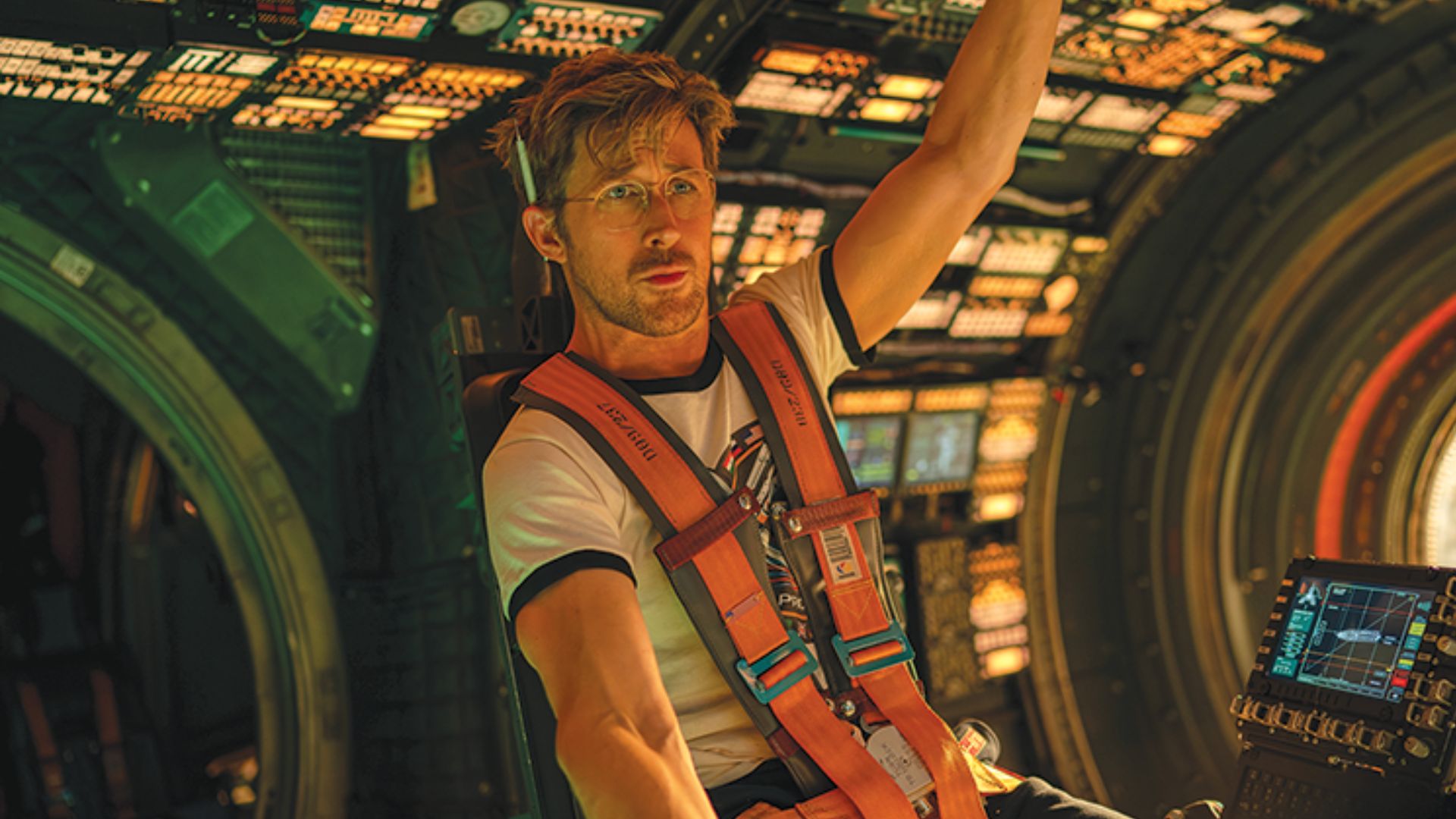
Phil Lord and Christopher Miller’s new film, “Project Hail Mary,” has quickly become a massive hit for the science fiction community, grossing $140.9 million worldwide opening weekend, making it the “largest debut of the year,” according to Variety.
Even one week after its opening, moviegoers at the Gateway Film Center who were in line 15 minutes before the movie’s listed showtime were already planning which movie they were going to see in the likely case that ‘Project Hail Mary’ — which was showing in the film center’s largest theater — would be sold out.
Based on Andy Weir’s novel of the same name, the film stars Ryan Gosling as Ryland Grace, a science teacher who is one of the only scientists on Earth who has the necessary knowledge to complete a space mission to stop alien cells from devouring the sun. When Grace wakes up from his travel coma, he has no recollection of who he is, why he’s on this mission, or what the mission even is, and the only other two scientists on the ship died in their comas.
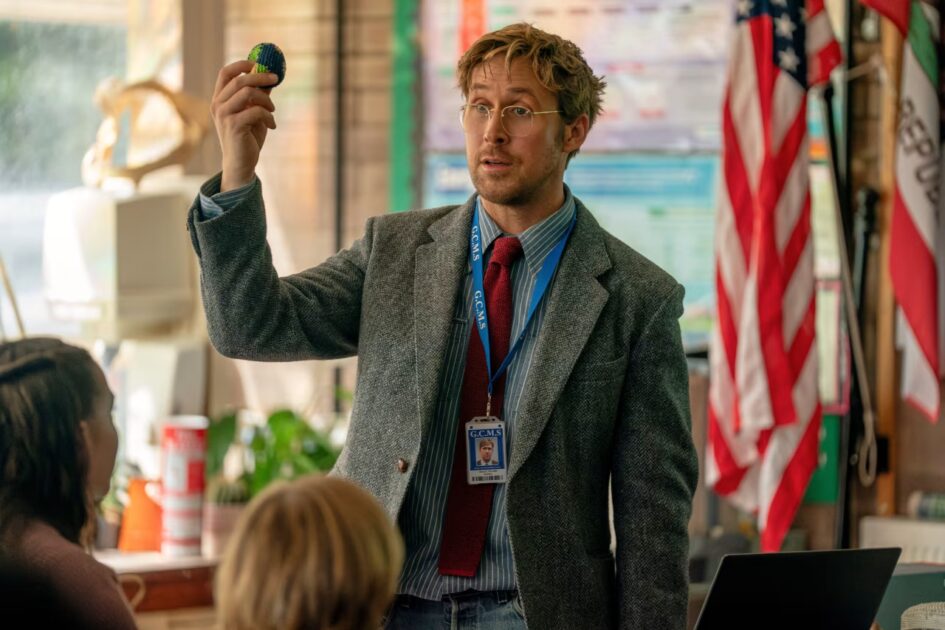
Weir also wrote “The Martian,” a novel that was adapted for the screen in 2015.
Science fiction, like comedy, is one of those genres where a lot of ideas can be lumped into the genre. Films you may not think of as being classic sci-fi can be labeled as sci-fi; recent examples include James Gunn’s “Superman,” Edgar Wright’s “The Running Man,” and Guillermo Del Toro’s “Frankenstein.” As far as “Project Hail Mary” goes, it is as classic sci-fi as it gets.
Seeing “Project Hail Mary” in theaters is possibly similar to audience members seeing “2001: A Space Odyssey” in 1968 or “Interstellar” in 2014. The ineffable feeling of watching epic space exploration movies such as these often comes from the grandiose visuals, and “Project Hail Mary” is no exception.
The film’s visual effects are some of the best in the last 10 years. The VFX team will most likely get nominated for an Oscar next year, and there is a good chance they will win.
The beauty of these visuals are largely due to Greig Fraser’s cinematography, who is no stranger to sci-fi films. Fraser was the cinematographer for “Dune” and “Dune: Part Two,” “The Creator” and “Rogue One: A Star Wars Story.” Out of all of Fraser’s work on sci-fi films, “Project Hail Mary” is easily his best.
While one may not see Ryan Gosling as the right actor to play a nerdy science teacher, he nails the role. About an hour into the movie, Gosling meets a rock-like alien named Rocky, but before that, it’s just him alone on the ship. While these scenes are intercut with scenes from the past, it is still a big demand on an actor to keep the audience engaged in solitary scenes, and Gosling’s charm and humor allow him to do just that.

Gosling’s performance is his best since “La La Land,” and unlike his more recent movies like “Barbie” and “The Fall Guy,” he gets to balance his comedic scenes with powerful emotional scenes. This balance really gets moving once Grace meets Rocky.
With a major sci-fi movie, the filmmakers are also competing with iconic sci-fi scores like John Williams’s compositions for the “Star Wars” movies, Alan Silvestri’s compositions for the “Back to the Future” movies, and, of course, Hans Zimmer’s compositions for “Interstellar,” a score that many younger generations have resonated with.
Daniel Pemberton, who also worked with Lord and Miller on the “Spider-Verse” movies, composed the score for “Project Hail Mary,” and it is phenomenal. The music feels like every sci-fi intellectual property combined. Many cues are reminiscent of “Close Encounters of the Third Kind,” the classical music used in “2001: A Space Odyssey,” and even the music that plays on the Space Mountain ride in Magic Kingdom at Walt Disney World.
A lot of the score is also very reminiscent of “Interstellar,” with the same bVI-bVII-i chord progression being used repeatedly throughout the film. The comparisons to “Interstellar” are present throughout many reviews (Winter is Coming, BGR, Screen Rant). The plots of both films are similar, and they are both very touching stories with incredible visuals and scores, but that’s really where the similarities end.
Based on the success of “Project Hail Mary” so far, it is likely that it will reach the same love that “Interstellar” has endured.
Like the recent Best Picture winner “One Battle After Another,” “Project Hail Mary” is a reminder of why people still go to the movies.