
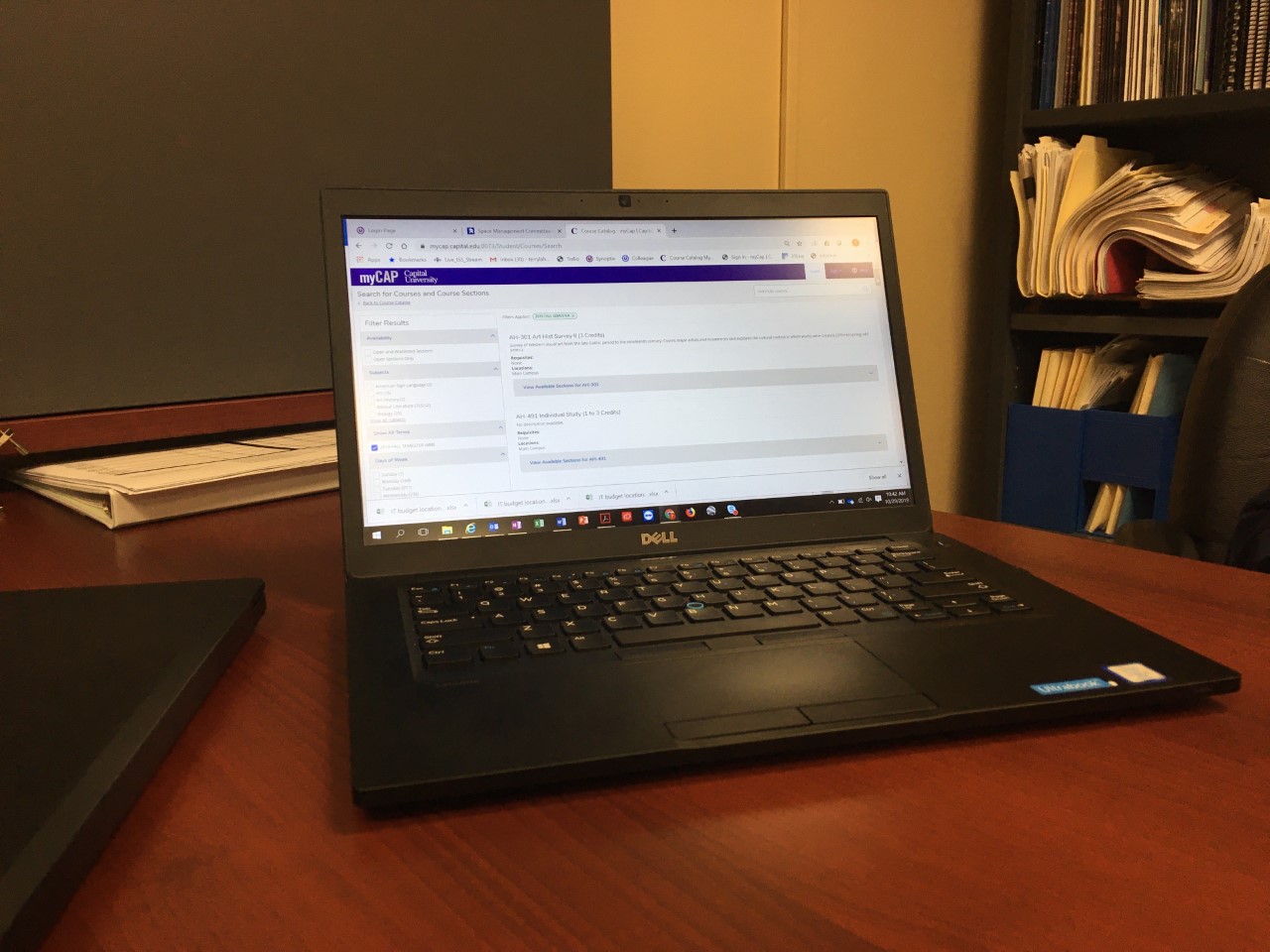
For students preparing their schedules for the spring semester, planning ahead has been made difficult when finding that the courses advertised in MyCap do not always reflect what is actually being offered at the university. Students have encountered classes listed in the university’s registration system that have no available sections or seemingly have not been taught in years.
For some, the discrepancies have complicated conversations with academic advisors and limited their ability to pursue courses that interest them or fulfill their academic goals.
Francesca Hatheway, a second-year English major at the university, said she has encountered several instances in which courses she was interested in taking were unavailable when she went to register.
“There would be a lot of classes I was really excited about taking … and then when I would go in to do it, there either just wouldn’t be a section for it, or they just fully would not have a class,” Hatheway said.
This issue has also affected conversations with academic advisors. Hatheway recalled planning her spring schedule with her advisor, who recommended a course and helped her add it to her prospective schedule. When she later went to register, however, she discovered that the course had no available section.
Hatheway said that she considers herself more fortunate than some other students when it comes to scheduling, yet the limited availability of courses can still be frustrating. She has also heard of students having to take courses at other institutions to make up for what is not available to them at the university.

“There are classes listed on there for English majors that just have … in my time here … just really never been offered,” Hatheway said.
For students interested in exploring different subjects within their majors, the limited offerings can also mean missing out on opportunities to study material that interests them. Hatheway said that some of the courses listed in the system feature works and subject matter that could broaden students knowledge but lack the availability of students with fewer options.
Andrew Carlson, Ph.D., chair of the history department and history professor, said the university‘s course offerings have been affected by broader changes in the curriculum and the difficulty of maintaining consistent course rotations.
“We have been shrinking our curriculum, and we have a more difficult time filling courses and having a regular course rotation schedule, and that means that there’s less demand for people to teach, and things are shrinking,” Carlson said.
As departments adjust their offerings, courses may not be available as frequently as students expect.
“We have our own rotation schedules. We also have bulletins, and those don’t match with software programs,” Carlson said, “so I’ve been talking to the registrar about that this week, and they say they can’t change things once they’re instituted, so in a way, what we have is the nightmare of an overcomputerized curricular system.”
Alexander Pantsov, Ph.D., a history professor, also acknowledged the difficulties surrounding course planning and the registrar‘s office, although he said he was uncertain how the issues would affect his own courses in the spring.
“We just talk about the registrar and the bulletin problems and stuff like [this]. I mean, [it] deals with my class directly, so I don’t know what would happen with this class in the spring,” Pantsov said.

However, according to University Registrar Dustin Epperly, responsibility for determining course offerings is shared between academic departments and the registrar’s office.
Departments are responsible for deciding which courses they want to offer, including when and how frequently those courses will be available. The registrar’s office then reviews the submitted schedule for technical issues before they are made available to students on the MyCap website.
Epperly said that the course schedule is reviewed every semester, with departments beginning to plan future offerings several months before registration opens. The registrar‘s office also works with departments to review existing courses and determine whether they will continue to be offered.
“If we decided … we’re not going to offer it anymore, and it’s no longer in the bulletin, then it should be removed from the system,” said Epperly.
Epperly said he is not aware of receiving a significant number of complaints specifically about inaccurate listings, although he acknowledged that the university has encountered situations in which students expected a course to be offered and later discovered it was not available.
In some cases, he said, courses may not run because of insufficient enrollment or other departmental considerations.
He also addressed common concerns about courses offered on less frequent schedules, such as every other spring or every third spring. While the university’s system includes options for courses offered during specific semesters or years, Epperly acknowledged that less common rotation schedules can be more difficult to accommodate.
“We should have the options to make most things work,” Epperly said. “I do know there’s a couple departments, though, that offer things like every third spring … or every second spring. Those ones are a little trickier to work with.”
For students encountering difficulties with course availability, Epperly recommended reaching out to academic advisors. Advisors can communicate with department chairs to clarify when courses are expected to be offered and help students find alternatives. The registrar’s office can also assist with technical registration issues, including prerequisite errors and problems accessing registration.
The differences between students’ experiences and the university’s stated scheduling procedures, raise questions about how accurately court listings reflect what the departments actually plan to offer.
While the registrar’s office says courses are reviewed regularly and outdated listings can be removed, students continue to encounter discrepancies that make planning their academic schedules more difficult.
