
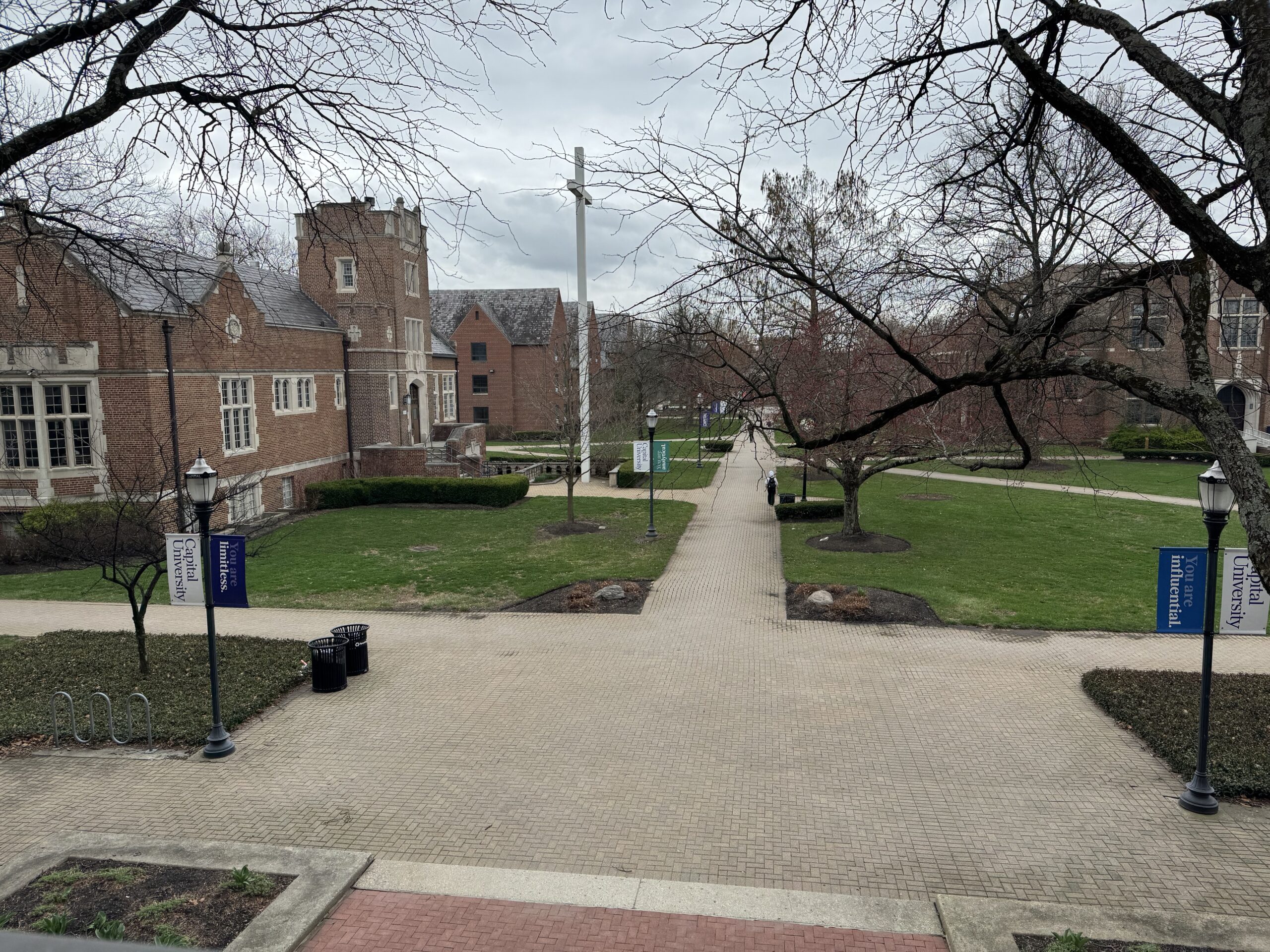
As spring semester continues at the university, many students and faculty say they are experiencing fatigue, lower motivation and difficulty maintaining routines compared to the fall semester. Compared to the energy of the fall semester, students report feeling more drained as colder weather, academic pressure and seasonal fatigue take a toll on campus morale.
The transition from winter break back into academic responsibilities can be challenging for students to adjust to coursework, jobs and extracurricular commitments. While the spring semester includes occasional breaks, many students say it lacks the sense of renewal that accompanies the beginning of the academic year. Without the same excitement and warmer weather, some students report feeling more mentally and physically drained as the semester continues.
First-year Isaac Distelhorst said fall semester feels more manageable and enjoyable, largely due to weather conditions and overall campus atmosphere. “Fall semester is just warmer,” Distelhorst said. “That’s one of the main reasons.”
Distelhorst said illness and colder weather also affect students’ ability to stay motivated and energized. “Everyone is sick and it can become overwhelming, and it is just a lot,” she said.
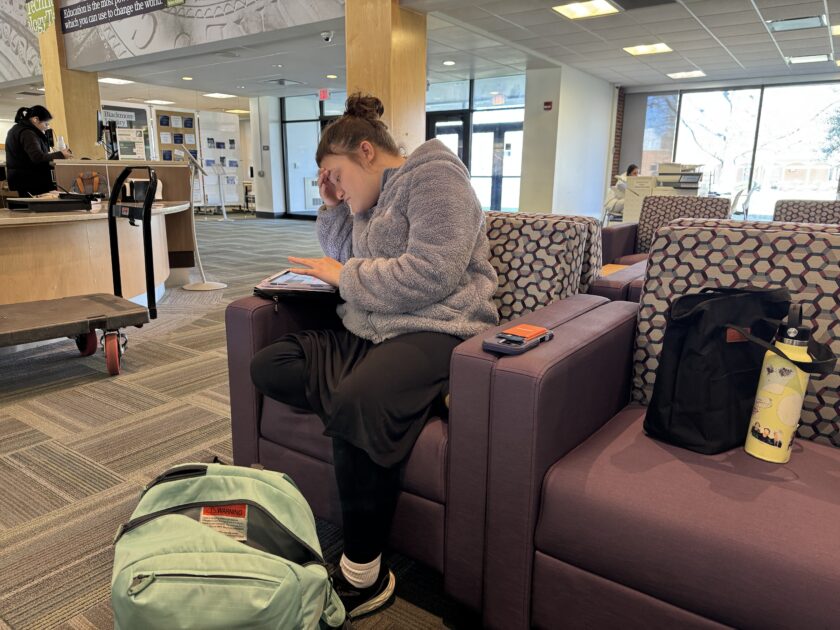
Although Distelhorst adjusted her schedule to avoid early morning and late evening classes, she said spring semester still feels more draining. “I definitely like my schedule a little bit better, but it still feels just intense,” Distelhorst said. “It still feels like longer days, even though I’m not out until 6 p.m.”
She said the semester also feels longer compared to fall. “Fall semester felt so fast, and now it feels like I’ve been in spring semester for like three years,” Distelhorst said.
Distelhorst said academic workload can contribute to stress, particularly as students progress through their programs. “I definitely have a lot more group projects this semester,” she said.
Distelhorst added that balancing course loads across semesters may help reduce fatigue. “Maybe do 18 credits for fall, and then for spring, I’ll do like 12, just so I have enough to be full time but not overwhelmed,” Distelhorst said.
Political science major Nolan Bartunek said limited daylight and long hours indoors contribute to his frustration with the spring semester. “I hate spring semester because I get here when it’s dark outside,” Bartunek said. “I have to sit in the library all day, so I can’t even see the sun.”
Bartunek said spending most of the day indoors can make it more difficult to stay motivated and maintain energy. He said the lack of sunlight and increased time spent studying indoors creates a routine that feels repetitive and exhausting.
Faculty members also report differences in student energy and engagement between semesters. Professor Sabrina Evans-Renkar said the fall semester often brings a stronger sense of renewal among both students and instructors.
“On balance, I prefer fall semester,” Evans-Renkar said. “I like its freshness. I like that I’m coming off of a couple months to not just restore but to sort of replan.”
Evans-Renkar said the beginning of the academic year often creates excitement and momentum. “The energy is great. People are always excited to be back, to be involved on campus,” she said. “New students always bring new energy.”
However, Evans-Renkar said the spring semester presents different challenges that can affect motivation and productivity. “It’s weird. You would think [that in] spring, we have all these breaks,” she said. “But for some reason, I just feel like it’s always more exhausting, somehow, in the spring.”
She said winter conditions and disrupted routines may contribute to fatigue and decreased motivation. “Coming off winter is hard,” Evans-Renkar said. “We all want to hibernate, and routines are hard.”
Seasonal conditions and academic demands may both influence how students experience the spring semester. Colder temperatures, shorter daylight hours and increased academic expectations can make it more difficult for students to maintain consistent routines and motivation.
Despite these challenges, students and faculty continue working toward academic goals as the semester progresses. Midterm exams, group projects and upcoming deadlines mark an important period in the academic calendar.
Evans-Renkar said adapting to academic challenges is part of the student experience and helps prepare students for future responsibilities. As the spring semester continues, many students and faculty hope warmer weather and longer daylight hours will help improve motivation and campus morale. Until then, students and faculty remain focused on completing coursework and finishing the academic year successfully.
