
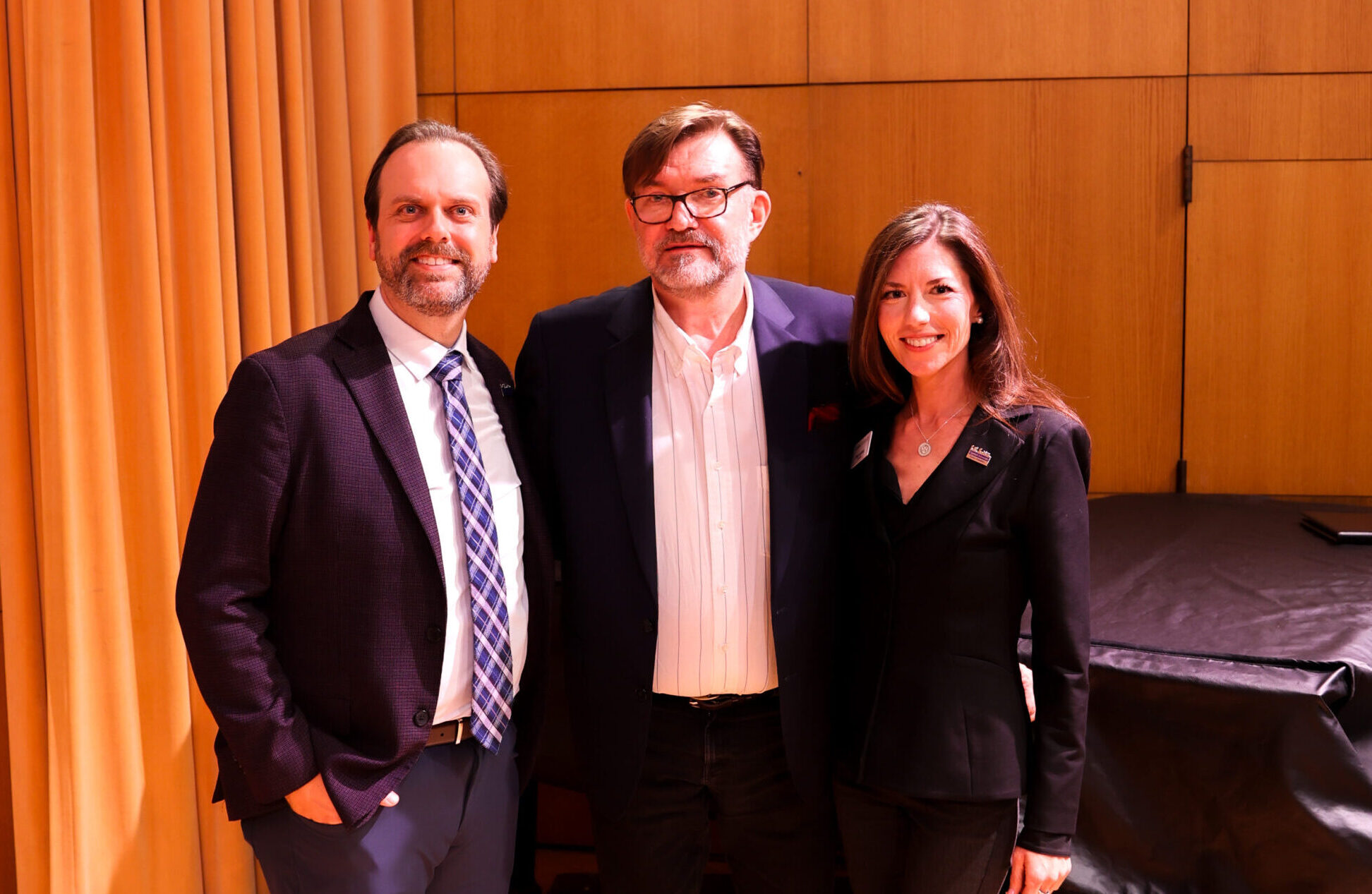
After a heartfelt introduction, an auditorium of people applauded as Evgeny Kiselev took the center stage.
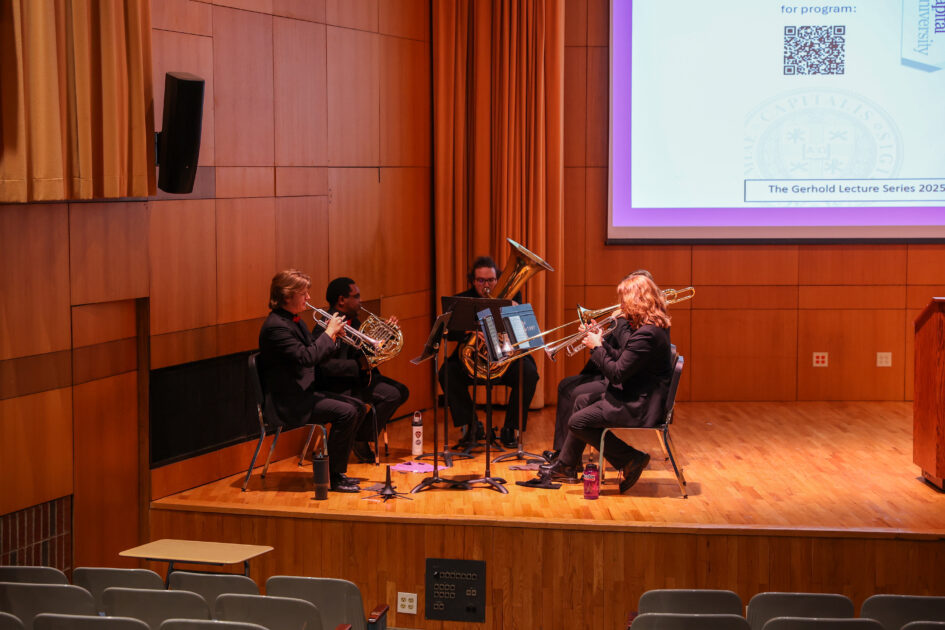
The Gerhold Lecture Series in the Humanities took place last Wednesday in Huntington Recital Hall. The Gerhold Lecture Series is an annual university event that aims to bring in speakers who are accomplished in the humanities.
This year, the university decided to bring in Evgeny Kiselev, a former Russian television personality and political analyst, who has since fled the country due to his outspoken criticisms of Vladimir Putin.

Kiselev’s story starts with his stint at Moscow State University, where he studied Persian. Kiselev attributes this part of his life as the root of his love for journalism.
After college, he moved to the Middle East, where he began his journalistic career.
Three years later, he started his career in television. Most famously, he was the host of a Russian television show “Itogi,” which Kiselev self-translates as “Results.” This show was on NTV, Russia’s largest privately owned television station. The show aired during the 1990s when Boris Yeltsin was in control of Russia.
This show, which is similar to the American show “60 Minutes,” primarily gave political commentary of current events, which allowed Kiselev to voice his opinions over a wide audience.
At the time, Yeltsin was moving toward a more democratic system in Russia, which allowed for more freedom for the media.
However, things changed when Putin was elected to power. Putin was not pleased with the criticism given to him by Kiselev.
In a fit of retaliation, Vladimir Putin had the station given over to a state-controlled company, Gazprom. Not happy with the changes, Kiselev and other journalists were forced to move to another station, TV-6.
TV-6, although not as popular as NTV, still had some success, but after a period of operating, the government took away the license from the station.
With this closure and one more attempt at a new channel, it was clear that Kiselev was blacklisted from the media.
“I lost all the opportunities of working as a television journalist. No television station would dare employ me as a presenter, as an anchor, as a correspondent, or even as a junior editor,” said Kiselev.
With no opportunities left for Kiselev, he was offered a chance to revitalize his career in Ukraine. Here, Kiselev was pleased with the freedom to voice his own opinion again.
As time went on, ratings for the show Kiselev was a part of began to naturally decline. This was also due to an interest in seeing more Ukrainian representation in their television, since Russia had controlled Ukraine for a long period of time.
As ratings began to decline, Kiselev created a YouTube channel, which would eventually become a large success. The channel currently has over 500 thousand subscribers and millions of views.
Even though Kiselev no longer lives in the country, his past in Russia still causes him issues. Recently, Kiselev was included in a lawsuit that alleged Kiselev has made “public calls to carry out terrorist activity.”
With this story, Kiselev gave his message on free speech, expression, thought, and press.
“And to put it shortly, all these freedoms combined together are the oxygen of democratic country, of democratic society, of democracy in general,” Kiselev said.
Even with this oxygen, getting the courage to speak up is not easy. Many people may want to speak up for their freedoms, but cannot, due to fear of the repercussions.
For anyone who wishes to follow in his footsteps, Kiselev gave some valuable wisdom on the benefits and drawbacks of a career in journalism. “Well, you have to have guts to criticize,” he said. “You have to understand that criticizing authorities, those who have money and power, could be a dangerous thing, and you have to be prepared for the consequences.”
Additionally, he talked about how the best journalists are those that “break the so-called journalistic standards.” Kiselev stressed the importance of telling the truth and being willing to give your opinion of that truth.
“ … the most viewed television journalists and newspaper journalists are those who express themselves, who are sometimes very biased, who do not hide their preferences, but they speak the truth.”
