
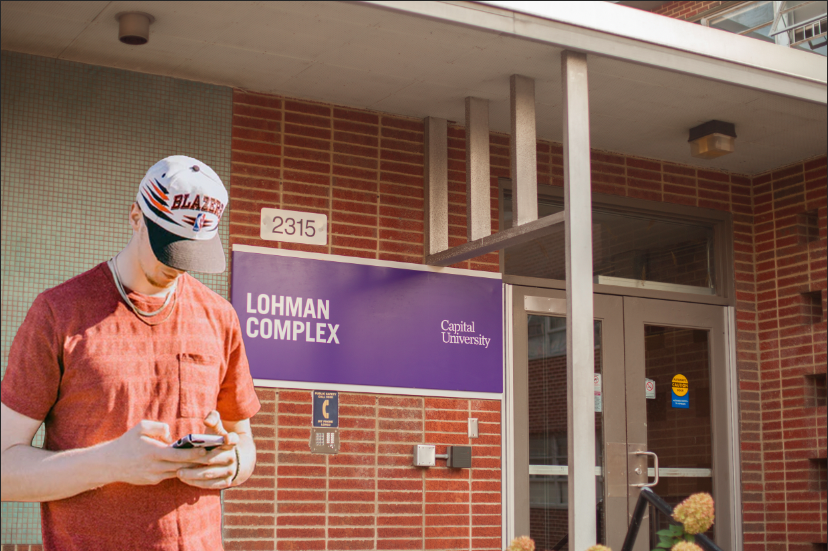
What was once a safe space for university students has now become a place of uncertainty, leaving unanswered questions of what the plan is for the vacant Lohman Complex.
Students may have heard rumors swirling about Lohman’s closure, whether due to mold concerns, unsafe living conditions, or renovation issues. Before the closure in the summer of 2026, Lohman Complex was used for housing first-year and upper-class students.
The residence hall included amenities such as a lounge and common spaces, cable TV, and a basement lounge offering ample seating and a microwave, as well as foosball and ping pong tables.
Now, this residence hall has previously been turned into a scream-filled haunted hallway during the scarier seasons by student government.
Yet the real story is not the building itself — it’s how its closure has affected the students who once depended on it. Tom Snee, the director of Residential & Commuter Life, offered his insight on Lohman’s future.
“Lohman has been closed for several years, and we’re still evaluating what the best long‑term use of the building will be. Our [Office of Residential & Commuter Life] priority is making sure any space we reopen meets safety standards and serves students’ needs,” Snee said.
“[The Office of Residential & Commuter Life recognizes] that students, especially commuters, need accessible spaces on campus, and any future use of Lohman will take those needs into account,” Snee added.
His comments echo the concerns raised in a recent student survey, where many university students expressed uncertainty about Lohman’s future and frustration over the lack of communication surrounding its closure. Commuter students in particular voiced concerns about losing dedicated space.
An ongoing survey asked students about living conditions, awareness and understanding about Lohman’s closure, the closure’s effect on students, and overall campus/student needs. Many students were unsure why Lohman closed, citing reasons ranging from mold exposure and unsafe living conditions to renovation complications.
Anonymous student replies highlighted an accumulation of issues: mold exposure in the basement where student organization rooms are located, money being invested into a building that sits unused, and worries about future renovations or demolition that could lead to an increase in tuition. Others questioned how the university plans to address mold concerns in other residence halls if Lohman’s closure was indeed mold related.
Commuter students also emphasized the need for improved campus spaces. An anonymous student wrote, “Students living on campus get to go back to their [residence hall] between classes, but for commuter students, we sometimes have hours between classes, but it’s not worth the gas money to go home and come back, so we have to find a place to sit around. It would be really nice to have spaces where we can decompress and rest.”
For many commuters, long gaps between classes mean spending hours on campus without a dedicated place to rest, study, or recharge. Their feedback has shaped recent changes around campus.
During the spring 2026 semester, student government revealed upgrades to the commuter lounge located on the first floor of Saylor-Ackerman Hall. The renovated lounge includes new games, free snacks, a full-body mirror, dry erase markers, additional seating, and access to a full kitchen. Commuters can easily enter the commuter lounge with a simple swipe of their student ID outside Saylor-Ackerman’s entrances.
Snee emphasized the intention behind the renovation, stating:
“[The Office of Residential and Commuter Life believes] the current commuter lounge provides meaningful resources and gathering space for commuter students. This year, the space was expanded and now offers a larger footprint, additional seating, and access to a full kitchen. Our goal has been to create a welcoming environment that supports commuters’ academic, social, and day-to-day needs while we continue evaluating future opportunities for commuter-focused spaces.”
These updates mark a step toward addressing commuter concerns, although many commuter students are still looking for the commuter lounge to include features such as printing access, more outlets and as one student remarked, “a place to nap.”
Although Lohman remains closed for the foreseeable future, various avenues are still being explored, including renovation options and the potential for bringing all areas of the residence hall back into use.
Snee said there are no finalized decisions to share regarding Lohman’s status and future, but the university will communicate updates with students and the campus community if any come about.
“Because long-term planning discussions are still underway, there are currently no finalized decisions to share,” Snee said. “Once plans are confirmed and details are available, the university will communicate relevant updates with students and the campus community.”
