
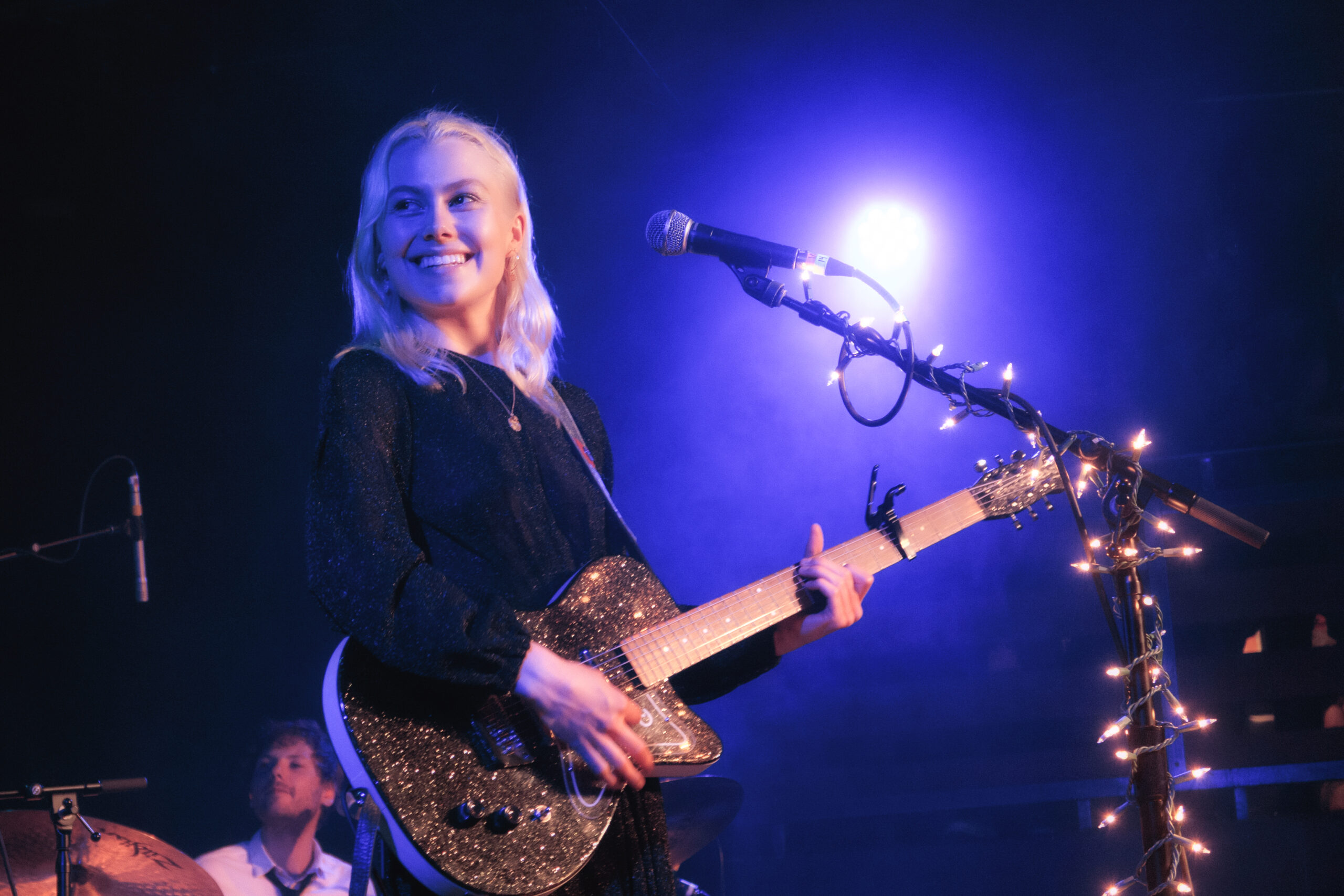
Since mid-September, indie musical artist Phoebe Bridgers has traveled around North America on her 2026 tour, “The Lost Tour.”
This tour is to promote her new album, “Lost Weekend,” which is her first album drop since 2020.
As fans head to buy the tickets for the show, they — as well as the public — have seen Bridgers’s special “no-phone” policy that prohibits any phone usage during the concert.
In such a modern age of technology, as well as the phenomenon of reliance when it comes to our personal devices, this rule makes for a unique concert experience for all who attend.
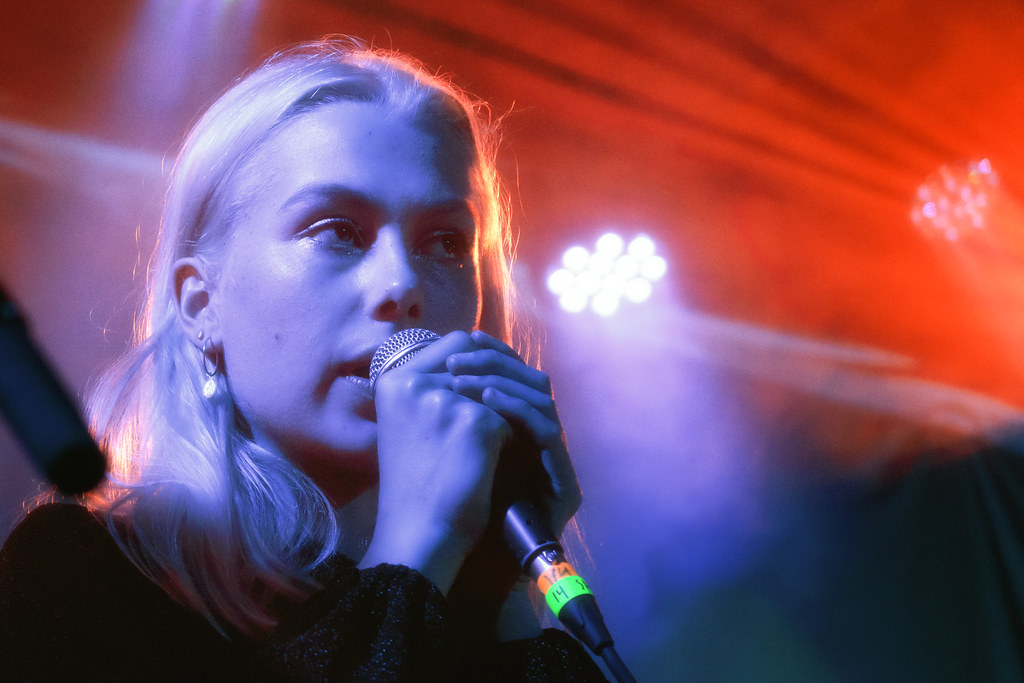
For long-time fans of Bridgers, this rule isn’t entirely unfamiliar for attending her shows. Senior university student Logan Erwin, who attended the show during Bridgers’s current tour, had already expected this rule to be enforced.
“She’s been doing pop-up shows before this tour, and they were also no-phone shows,” Erwin said. “When she announced the tour, she had said that it was also going to be a no-phones tour. I wasn’t sure how it was going to work.”
Bridgers’s recent shows before the tour had all been located at much smaller venues. At these locations, a no-phone rule is much easier to enforce. However, for this tour, Bridgers is back on the road for shows at much larger venues and stadiums for an unforgettable show.
Liam O’Loughlin, Ph.D., a university associate professor of English and fellow Phoebe Bridgers fan, also attended the Columbus show of the tour. It was held at Nationwide Arena downtown.
“This was the first time I had attended a performance that had an [explicit] no-phones rule in the last few years,” O’Loughlin said. “It wasn’t like ‘Oh, please don’t use your phones,’ and then people do it anyway … it’s enforced at such a scale. [Nationwide Arena] holds tens of thousands of people; it’s not like a classroom or a club — it’s a stadium.”
Upon entry into the concert, an attendee’s phone was locked in a pouch to remain during the show. Once they were leaving the venue, their pouches were unlocked, and their phones were returned to them.
But there is always a certain concern of someone needing to access their phone for an emergency that circles events such as these.
“There were phone designated areas in the hallways,” Erwin said. “You could leave the stage area and unlock it if you had to text someone back.”
Not only was the passage of time a strange experience, the lack of phones also encouraged (what some may call old-school) human connection and interaction. Without a phone in one’s hand, it made for a lot of creativity and engagement with other people during the show.
“I want to say that there was this timelessness phenomenon since I didn’t see a clock when walking around the stadium,” O’Loughlin said. “At some points, I didn’t know what time it was. There’s a weird floatiness that happens when you can’t look at a clock.”
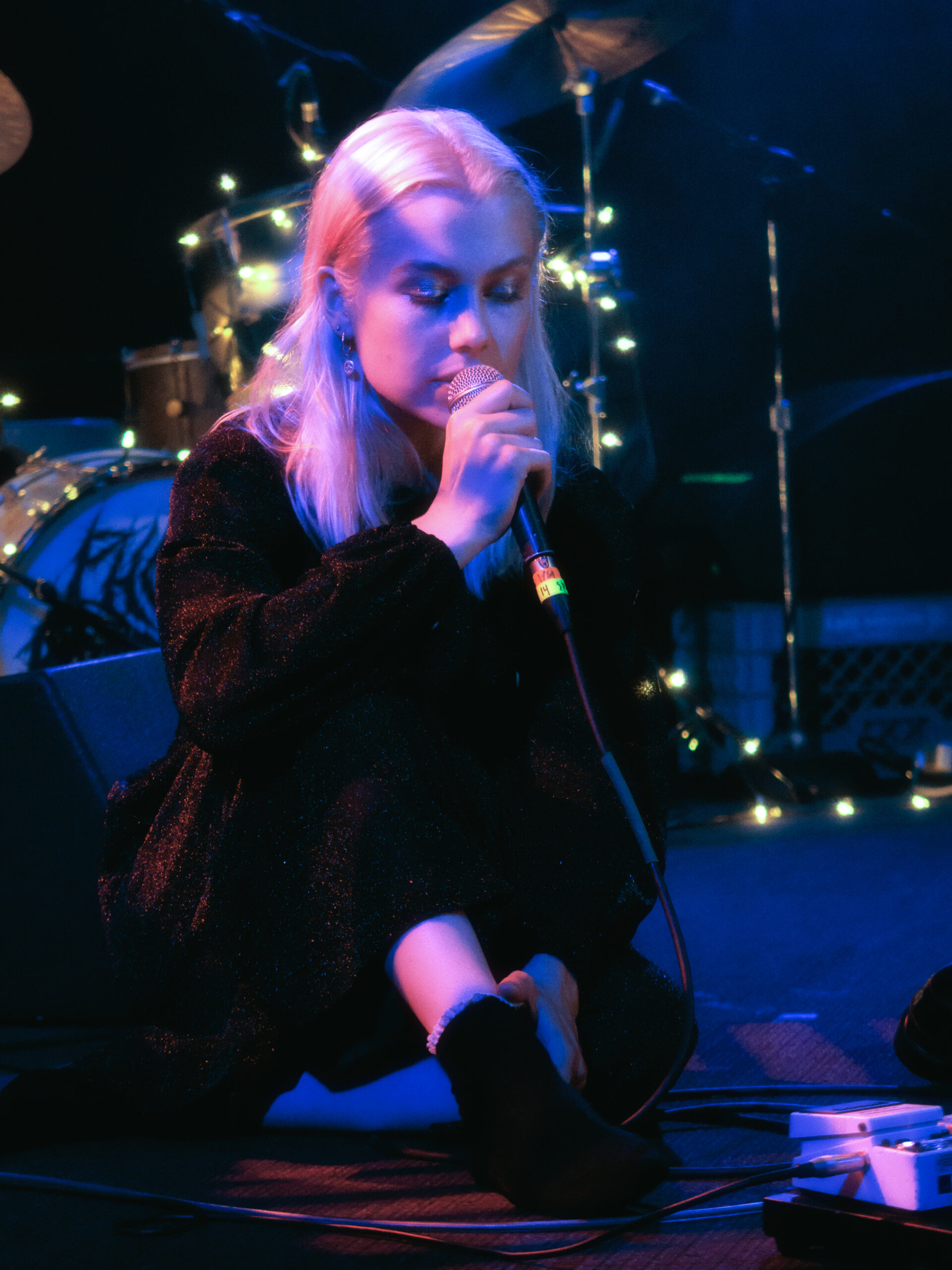
Instead of phone flashlights to wave during ballads, people brought lighters and were still able to light up the stadiums with a nostalgic and comforting glow during those slower songs.
No phones gave the audience free reign to sing, dance and enjoy the company of those around them.
“I noticed a lot of people leaning on each other, be it friends, partners, parents and children … people were physically closer together and interacting,” O’Loughlin said.
For some, recording memories and fun experiences of concerts is very important. For Erwin and O’Loughlin, taking away the option to catalogue memories helped connect them physically into the space of the performance.
“I also like to take photos and videos … but I feel like sometimes when I’m in that moment, I’m like, ‘Oh, I have to worry about when to take a photo or video at the right moment.’ It kind of takes that option away so you don’t have to think about it,” Erwin said. “Once my phone was locked up, I was fully focused on the concert, and I think that made it even better.
O’Loughlin shared Erwin’s sentiment on the human connection during the show, specifically how attendees would meet up again if they got separated or lost at the venue.
“It makes me remember a pre-phone time,” O’Loughlin said. “Sometimes not having your phone forces a kind of trust, right? It enforces that you’ve made a promise, you’ve made a plan, and a phone allows you to double-check and confirm that over and over again. It also allows you to change that plan constantly or to not trust it anymore. I did just have to expect that things would be okay, or if I needed to know something, it would happen later.”
With the sensitive nature of some of her newer songs, Bridgers is creating a sacred musical environment where everyone is allowed to breathe and experience the music, emotions and all that comes with it at her shows.
In such a technology-driven society, sometimes it truly can do some good to put your phone down for a while and experience the world for a short time, in both the mundane and beautiful ways, and in the case of this tour, experiencing the abstract reality of human emotions and connections through the thread of some good indie music.
Phoebe Bridgers’s “The Lost Tour” will conclude its North American leg of the tour on Nov. 1 in Inglewood, California. From there, Bridgers will continue the tour in Europe until Dec. 12, with her final show being held in Stockholm, Sweden.
