
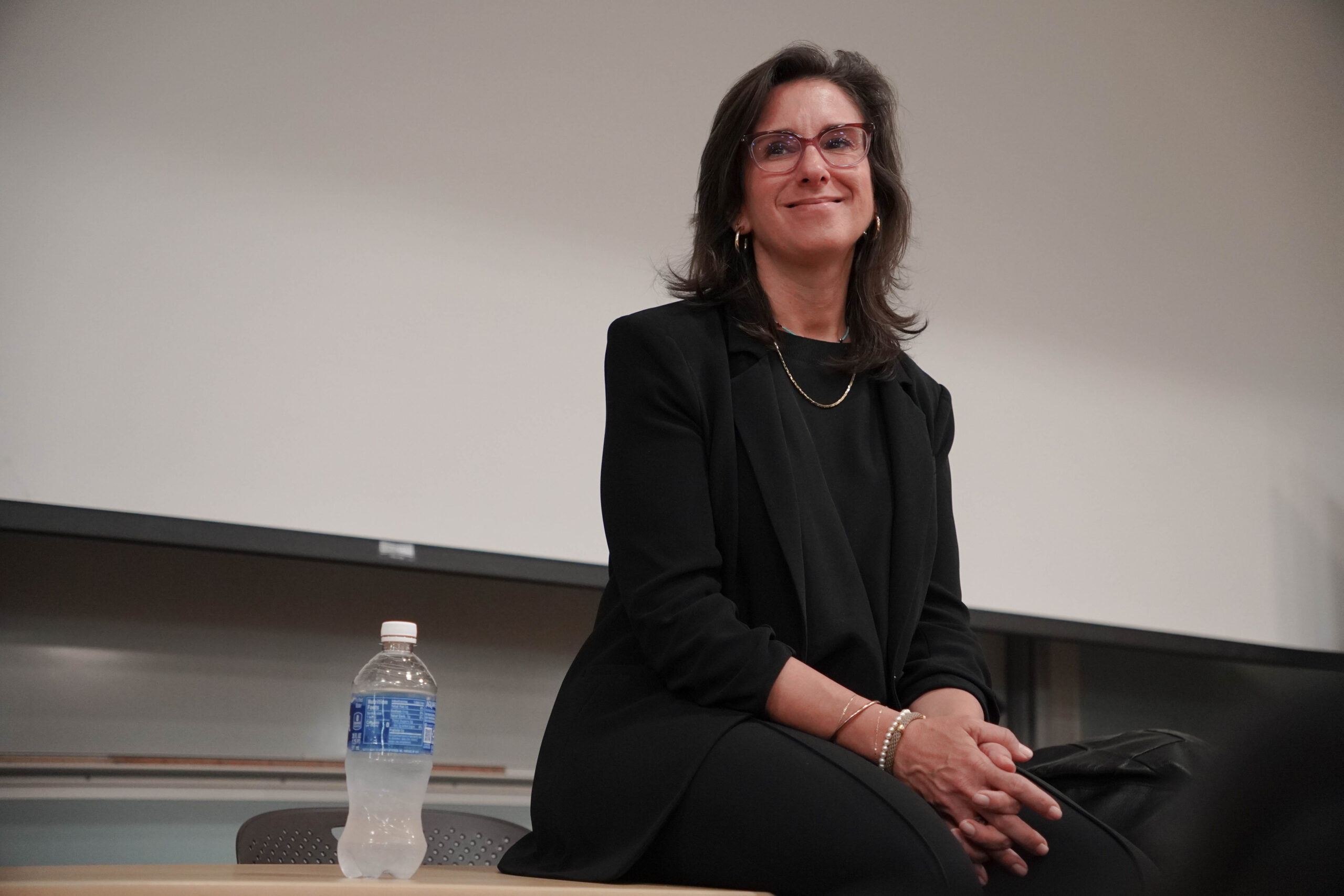
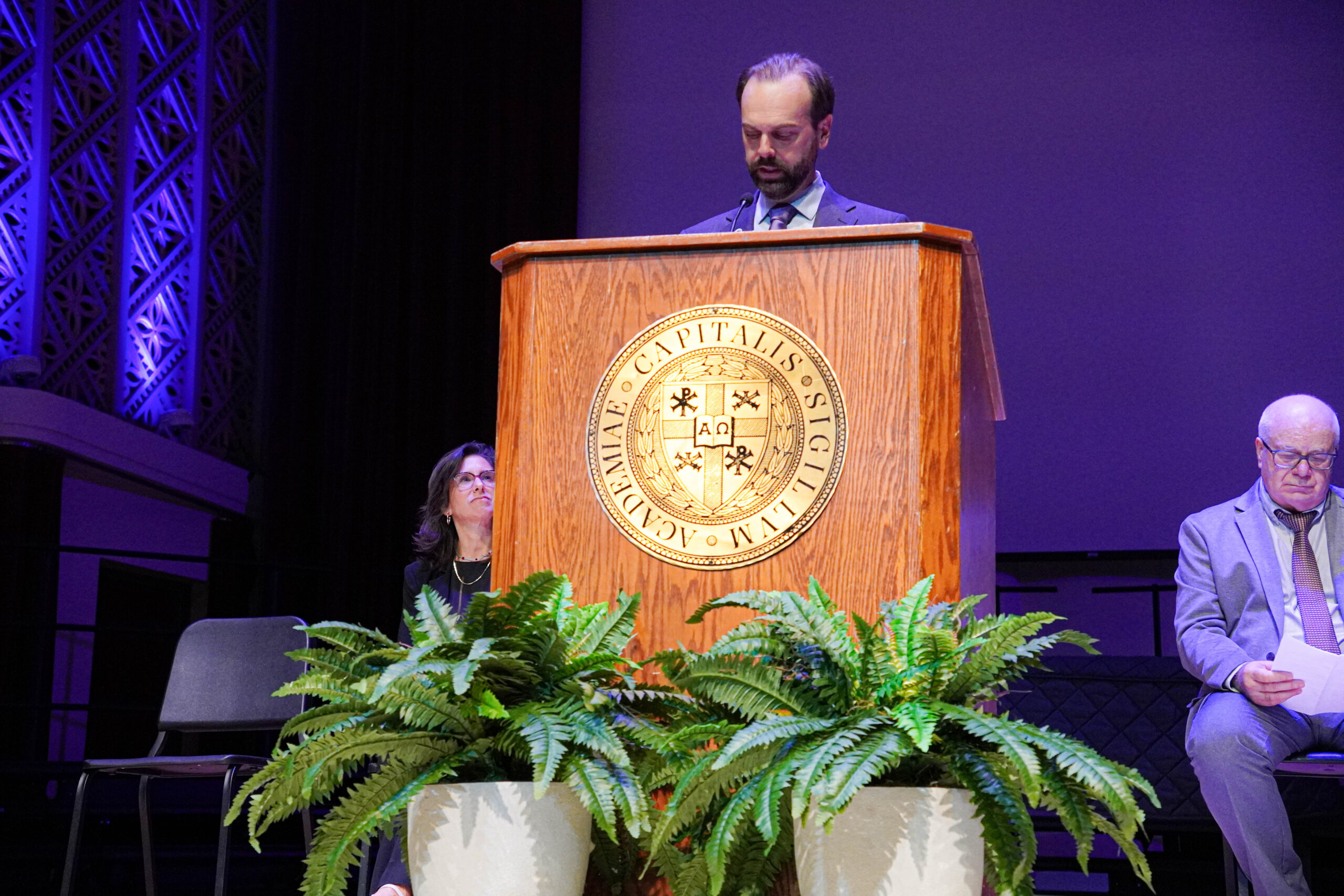
As midweek afternoon classes dismissed, students flocked to the Bridge of Learning to hear award-winning New York Times journalist Jodi Kantor speak about investigative reporting and discovering your life’s work.
As the keynote speaker of the 2026 Gerhold Lecture Series in the Humanities, Kantor stands out as one of the most notable and exciting guest speakers to have visited campus in years. Kantor co-authored the award-winning story with Megan Twohey that investigated Hollywood producer Harvey Weinstein’s hush-money payments to women accusing him of sexual assault.
Two years after the article was published, Kantor and Twohey published “She Said,” an in-depth book about the investigation, detailing their process and the often grueling realities of investigative journalism. The book was adapted into a 2022 film of the same name.
“Investigative journalism [is] a very special island within journalism, because I don’t write about what happened yesterday,” Kantor told students at a pre-lecture student Q&A. “The mission of investigative reporters is to take secrets that are in the public interest and bring them to light.”
Before working on the Weinstein investigation, Kantor focused mainly on stories regarding women’s rights. Twohey covered the 2016 presidential election and the infamous resurfaced Access Hollywood tapes of then-candidate Donald Trump making disparaging comments about women on a hot mic.
The idea for the Weinstein investigation came after the Times reported that highly-popular political commentator Bill O’Reilly and Fox News had settled five lawsuits accusing O’Reilly of sexual harassment.
Weinstein, a co-founder of Miramax, had been thanked at the Oscars more times than God. His credits at Miramax included countless producing credits on films like “Good Will Hunting,” several Quentin Tarantino films, and the “Lord of the Rings” trilogy.
Weinstein is currently serving a 15-year prison sentence for raping production assistant Miriam Haley in 2006.
The article’s publication held massive weight for the current landscape of social media and activism, and Twohey and Kantor’s work shared the 2018 Pulitzer Prize for Public Service with the New Yorker.
Daria Arincheva, a university history professor, said Kantor and Twohey’s book offers students an important lesson.
“It demonstrates what it means to take your work seriously,” she said. “What kind of work is worth doing? What questions are worth pursuing? What can sustained attention, skill and empowerment achieve? These are the questions at the heart of a university dedication.”
Kantor’s newest book, “How to Start: Discovering Your Life’s Work,” dives into this topic.
When it comes to finding out exactly what is one’s life purpose, Kantor proposed three goals for a career: money, workplace satisfaction and working in service of others.
“Every job has components that are not fun, but work determines a lot of our happiness,” she said. “We spend a tremendous amount of time at work and I have never met anybody who is a happy person and miserable at work.”
Kantor told lecture attendees about her journey to the New York Times, from her expulsion from the student newspaper at Columbia University to her withdrawal from Harvard Law School. Somehow, in the hopelessness and despair of incredulity, she found her way.
The first big story that Kantor covered was a 2006 story about the class disparities in breastfeeding resources. It was because of her own work that breastfeeding equipment was installed in the Burlington International Airport in Vermont.
“I had this tiny glimpse that the audience can take our journalism and do things with it that we have never dreamed of,” Kantor said.
Almost a decade after the publication of the Weinstein story, Kantor is now reporting on the Supreme Court for the Times, applying her investigative reporter skills to an incredibly private and mysterious institution. Although she occasionally writes about politics, she emphasized the difference between journalism and activism.
“[Twohey and I] weren’t out to get Harvey Weinstein. We weren’t activists,” she said. “We don’t make political donations. We don’t have bumper stickers. We were only trying to get to one thing – the truth.”