
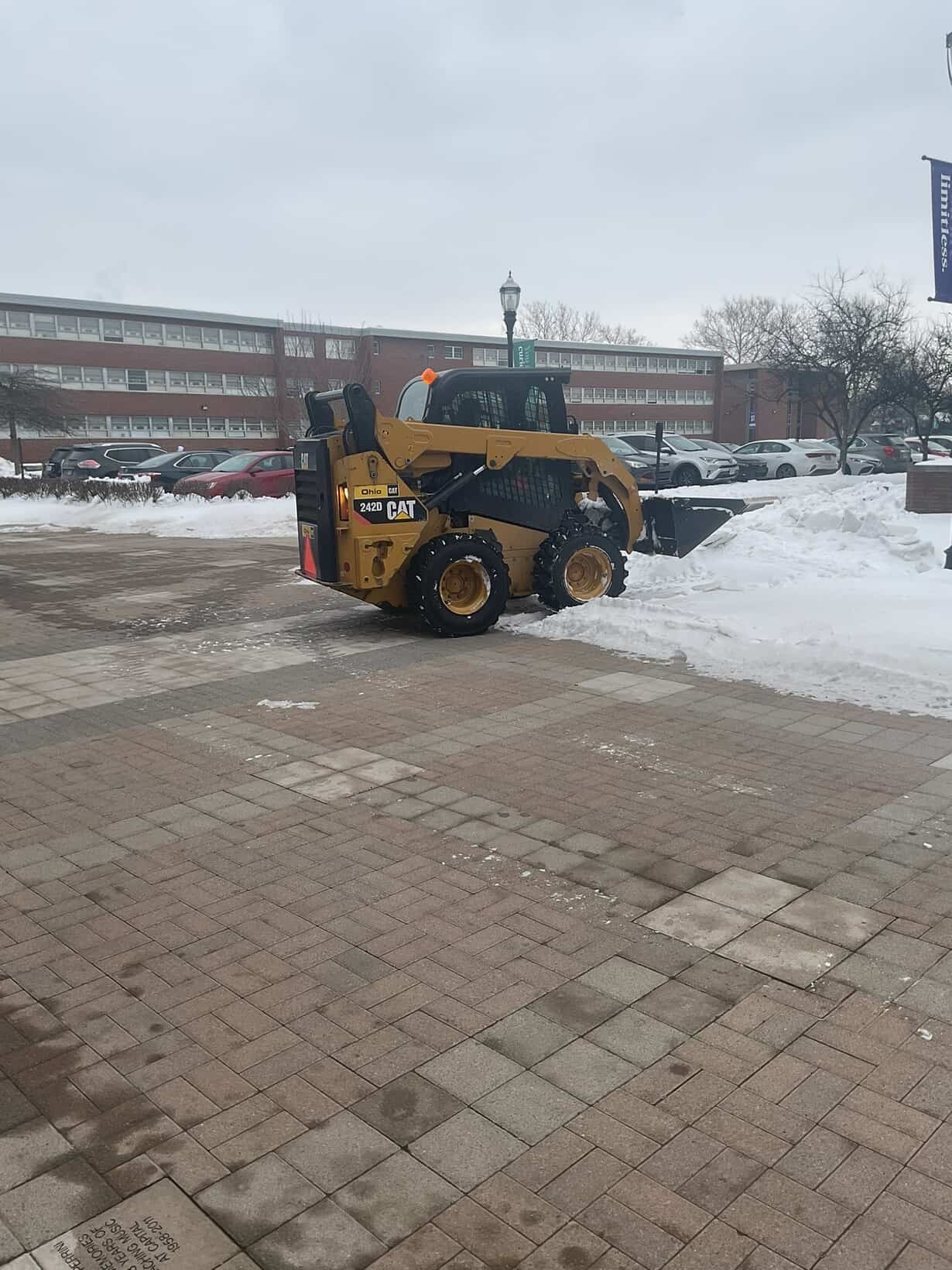
Snow piled up on campus due to Winter Storm Fern, forcing students and facilities staff to deal with the impact. Sidewalks were impassable, cars in university parking lots were snowed in and the facilities department had never dealt with a snowfall quite like this.
“We haven’t seen a storm like that in a long time,” said Steven Kinsinger, co-director of facilities management. Kinsinger oversees all academic buildings and university grounds on both the main campus and law school, including electricity, plumbing, heating and cooling, elevators, and fire alarms.
Classes were canceled Monday (Jan. 26) and Tuesday (Jan. 27), but classes continued on Wednesday. Many students were upset by the condition of the sidewalks, with many still covered in snow.
“We focus on the internal [sidewalks] first. We always work on the student union so that you [can] get in there and get food … We work on buildings like the library because it is a 24-hour space,” said Kinsinger.
Despite many of the sidewalks around campus being public, the City of Bexley Service Department actually does not manage them, even when it comes to the recent large snowfall. The service department cleared the roads, which pushed snow onto sidewalks that the university’s facilities department had already cleared. Crosswalks became a point of congestion, with snow from the street making it hard to safely cross.
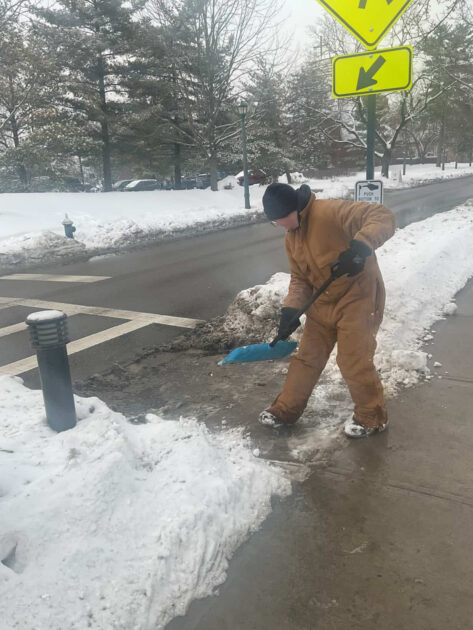
Much of the facilities work has been outsourced to an outside company.
“We do have a contractor that we use for the parking lots. We just can’t handle the whole thing ourselves; we’re not big enough. Our department has reduced quite a bit with the changes in the university and [the] cutbacks,” explained Kinsinger.
In order for parking lots to be cleared, students were instructed to move their cars to lots that had already been cleared, such as the faculty and staff parking lot. This caused problems for many students who did not have shovels and were attempting to move their cars through inches of snow.
Many students were simply frustrated with the implication that the university would make students move their cars but not have sidewalks shoveled when they walked to class. Many students moved their cars despite their lack of equipment, using ice-scrapers or whatever was handy in their residence halls.
“They didn’t give anybody shovels,” said NaMya Banks, a student who lives on campus but left for the weekend of the snow storm. “If we look on campus, nobody’s having a shovel in their room, so it was definitely tricky for a lot of people.”
“Anybody can call us if they want a shovel. We have shovels,” Kinsinger said in response to questions about frustrated students. Nowhere in any campus communication was this explained.
Cars were supposed to be moved by Friday night, and regular ticketing was to resume by Monday, after the outside contractors were supposed to have come in and plowed the parking lots.
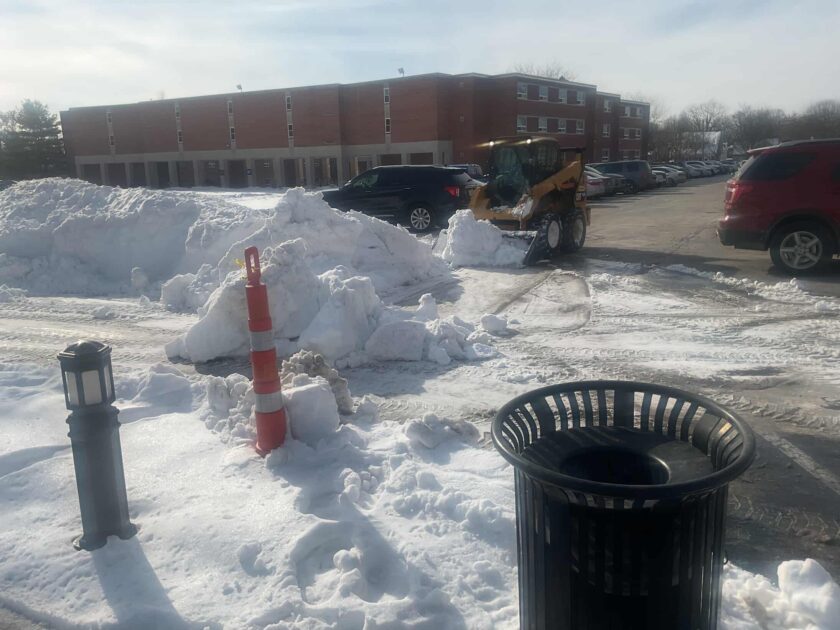
“We had everybody move. There were still students who didn’t move [their cars], but the company didn’t come in and plow. That’s the downside to having an outside company do things. We went through with our equipment [and] cleared as much as we could,” said Kinsinger. The company refused to follow through with plowing any lots that still had student cars parked there.
Banks came back to the university on Sunday night, only to discover that some of the residence hall parking lots had not been plowed. “They said that regular parking will resume on Monday, and I’m here Sunday night, and it’s still looking exactly the same, so I literally have to drive into snow to park.”
Student cars were still snowed in, and students who put in the effort to move their cars had done so for no reason.
Student Stevan Stewart’s car was even damaged by the snow. “The plastic piece that covers the undercarriage [of my car] got ripped off because they didn’t plow … Because they didn’t plow, I hit a big chunk [of ice] in the parking lot, and it ripped off,” explained Stewart.
Conditions remained perilous on campus sidewalks, some of which were completely un-shoveled as facilities dealt with higher-priority areas. Students were frustrated that classes remained in session, even though paths were snowy.
“I feel like we should’ve just done remote learning the whole week,” said Banks.
“It frustrated me because I [couldn’t] walk! Even when the snow melted, it [was] like black ice,” said student Keyanne Brou.
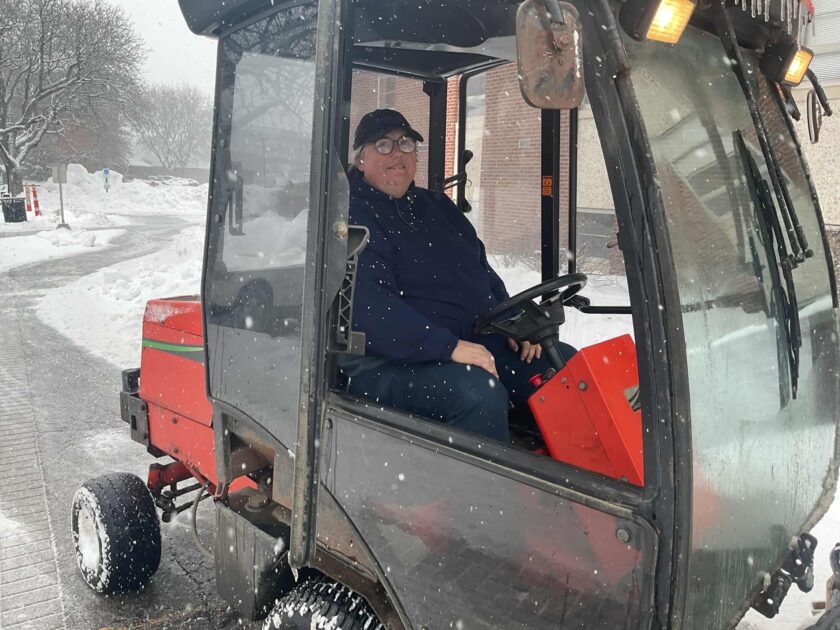
Many students slipped on their way to classes that week until facilities got a handle on the snow.
Once the snow storm was announced in the forecast, facilities began their preparations.
“We [made] sure that we have enough ice melt around campus,” Kinsinger said. “We made sure our equipment [was] all operational and ready to go … We [came] up with a plan for employees … We set it up so that we had actual employees staying on campus, so they didn’t have to try to get in [once it snowed].”
Facilities employees worked outside despite the extreme cold.
“We still go out. What we do is that we just reduce the amount of time that we’re out, just to protect everybody,” Kinsinger said.
Kinsinger explained that in the future, the facilities plan wouldn’t change their snow management plan, but they would change their methods of communication with students.
“Communication is critical. If you can’t get [in contact with] somebody in the facilities office, call public safety,” Kinsinger said. “We’re actually going to change how we notify everybody and put it in there that if you have an issue, call public safety … If we get a storm, you learn: well, here’s a weak spot right here. Let’s fix that weak spot.”
The university facilities department is not equipped to deal with this large of a snow storm, and this is mostly because it is understaffed, similar to many university departments.
Kinsinger explained that just within the last year, many facilities staff had retired, and no new people had been hired. Kinsinger himself used to just manage the electrical aspects of university buildings but has now had to manage much more as a result of losing staff.
These staffing cuts mostly have to do with university funds, which Kinsinger explained are directly related to student enrollment. The more students who enroll, the more money the university has to put back into its various departments.
The general attitude of the student body with regards to the snow management has been frustrated. This is a campus-wide problem: enrollment goes to funding which goes to facilities or sometimes outside contractors. It’s hard to know who to blame when you slip on that ice patch.
