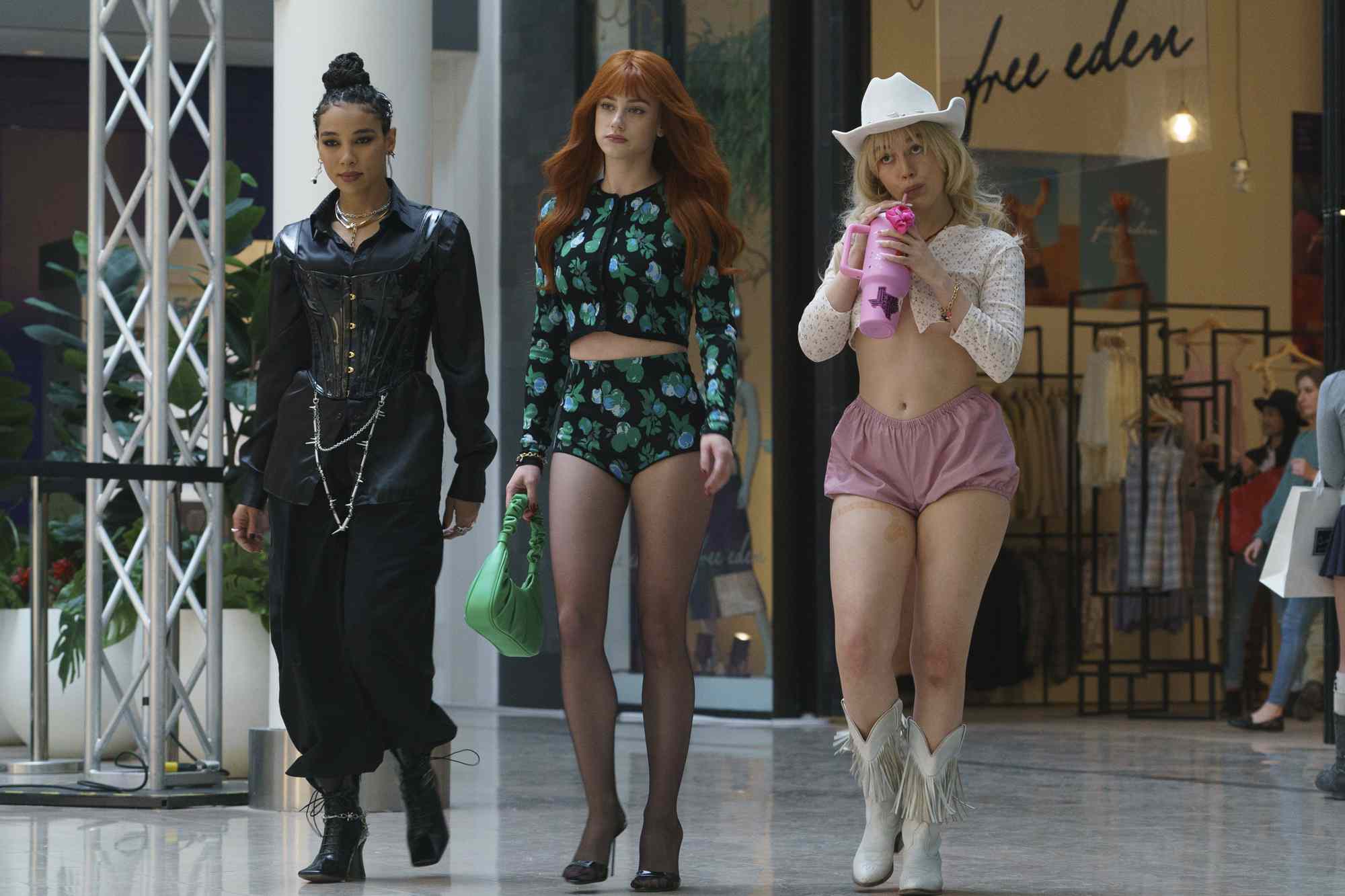
In an age where the “elevated horror” subgenre has become the zeitgeist for horror movies, few filmmakers are keeping the camp that made beloved classics such as “Friday the 13th” and “A Nightmare on Elm Street” so fun; however, Meredith Alloway’s “Forbidden Fruits” is a horror comedy straight out of the ‘90s.
The film is about three employees of a fictional high-end clothing store called Free Eden, who call themselves “the fruits” and are part of a witchy cult. When Apple, Fig and Cherry hire a new employee, Pumpkin, things slowly start to go rotten as Pumpkin learns more about who her new best friends really are.
Lili Reinhart (“Riverdale”) and Lola Tung (“The Summer I Turned Pretty”) are the film’s leads, playing Apple and Pumpkin respectively. Tung gives one of the best performances in the film, but Reinhart’s performance is not much better than her work on “Riverdale,” a show that frequently gets criticized for its poor acting.
Reinhart’s performance ends up working, though, because it is clear that the filmmakers had no intention of making a film that is on the same level as something like “The Shining.”
Reinhart’s line delivery adds to the film’s campiness and, while not nearly as good, is similar to Rose McGowan’s performance in “Jawbreaker,” a similar film to “Forbidden Fruits” with its cliquiness, dark humor and emphasis on fashion.
The best part of “Forbidden Fruits” was the script. Although the plot and lore could feel a little convoluted at times, the dialogue was so sharp and truly funny and felt like the film was written during the times of its influences.
Alloway, who pitched the film as “‘Mean Girls, but a slasher,” has also cited “Heathers” and “The Craft” as big influences. Similar to all of those films, the young female characters use slang and insults that capture the period while still feeling timeless; another example being Gregg Araki’s “Teen Apocalypse Trilogy.”
“Forbidden Fruits” is produced by Diablo Cody, best known for writing “Juno” and “Jennifer’s Body.” While Cody had no involvement in the script, the film feels very similar to one she would write.
Although the film feels a lot like its ‘90s and early 2000s influences, it takes place in modern day, so unlike many other movies and TV shows that try to capture the same tone as ‘80s and ‘90s movies and TV shows, it doesn’t rely on any nostalgia. Alloway’s ability to do this was what made the film so enjoyable and refreshing.
The film takes place almost entirely in a mall, but there are no shots lingering on Orange Julius or a Hot Dog on a Stick like in season three of “Stranger Things” because these stores don’t exist anymore; “Forbidden Fruits” can only use nostalgia in its tone, which it does exceptionally well, and even then, it doesn’t feel at all like it’s solely relying on this nostalgia.
The film does rely too much on music. ‘90s comedies were known for having music playing consistently in the background, and “Forbidden Fruits” does that too, but it’s more distracting than beneficial.
A lot of it is because of the type of music in the film’s soundtrack. Many of the songs are trashy pop songs that sound like late 2015 Top 40 music. The hyper energy of these songs don’t blend well in the background at all and take you out of the scene – another reason the plot may be hard to grasp at times. At one point, a dance scene to an electronica cover of Bryan Adams’s “Heaven” seems to come out of nowhere and doesn’t add anything to the film.
The climax of the film also doesn’t stick the landing, mainly because of Reinhart’s performance. While her acting supports the tone of the rest of the film, her monologue in the climax requires stronger acting skills that she doesn’t quite have yet. Her delivery accompanied by an awkward POV close-up shot makes what should be the most important moment of the film hard to believe.
Overall, the film succeeds in what it sets out to do and gets the theater laughing, but it certainly is not a movie for everyone.